Cycling and Kayaking in Ireland: The Blueway Routes
The Suir, Shannon and Barrow Blueways each pair a paddle with a ride. Logistics, gear, safety and the operators running combined trips in 2025.
Introduction
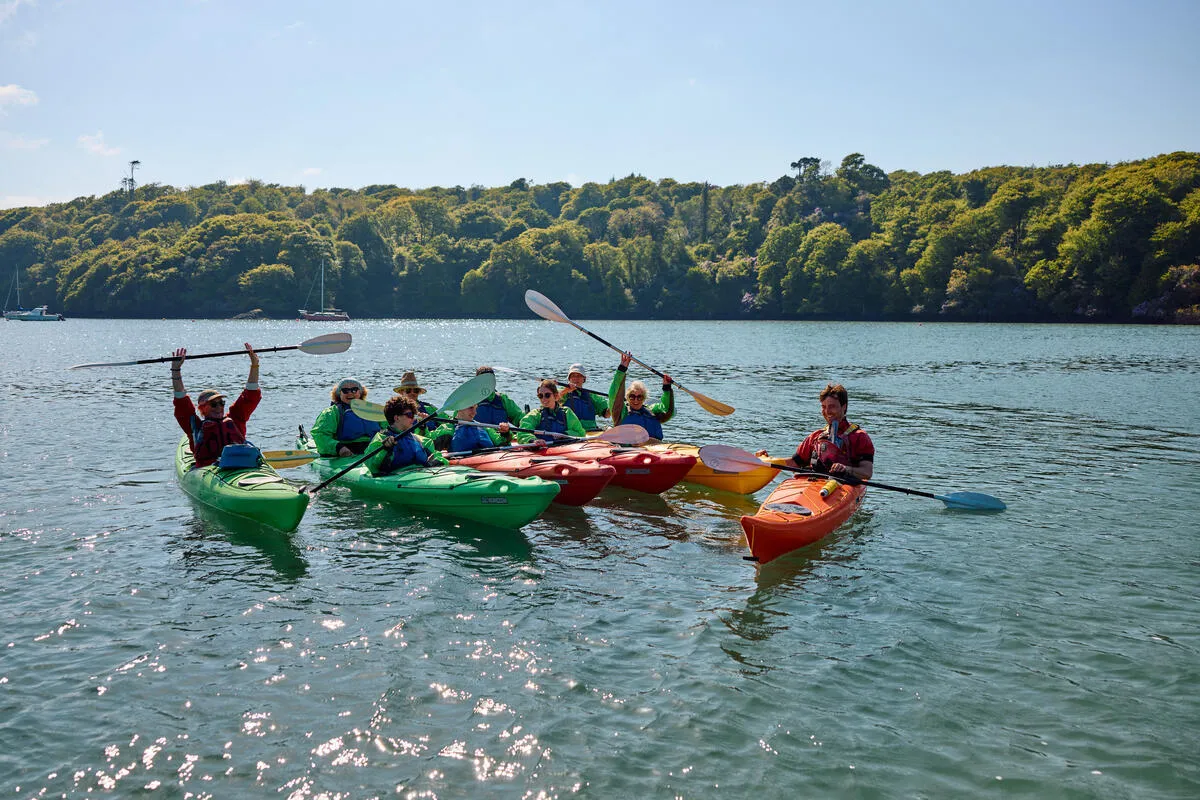
Ireland’s rivers run slowly, mostly through farmland, and several of them now have a surfaced tow-path along one bank. That is the whole reason the surf-and-turf trip works here. Cycle one leg, paddle the next, and use the same corridor for both.
It is not a purist’s holiday. You will spend a decent share of the day strapping an inflatable kayak to a rack and unstrapping it again, and a few tow-path sections are flatly dull for a mile at a stretch. The rivers make up for it.
Why Combine Cycling and Kayaking?
| Benefit | Cycling | Kayaking |
|---|---|---|
| Fitness | Low-impact cardio, leg strength | Upper-body, core, balance |
| Scenery | Panoramic inland vistas, historic towns | River bends, wildlife, secluded coves |
| Flexibility | Easy to cover long distances quickly | Access to waterways inaccessible by road |
| Sustainability | Zero-emission transport | Silent, non-motorised travel |
| Adventure | Switch between two modes for variety | Break up long rides with water-based fun |
The mix keeps muscles balanced, reduces monotony, and lets you see both sides of Ireland’s waterways, the tow-paths on land and the river or sea itself.
Top Surf-and-Turf Corridors in Ireland
1. Suir Blueway (Co. Tipperary)
- Length: 53 km river, 21 km tow-path for cyclists
- Highlights: Cahir Castle, Swiss Cottage, Clonmel’s white-water slalom course, historic Butler Trail
- Kayak difficulty: Grades 1-2 (suitable for beginners with a guide); 300 m slalom for advanced paddlers
- Cycling surface: Mostly macadam/tar, flat, wheelchair-accessible sections
- Best time: Late spring to early autumn; water levels steady, daylight long
Why it works: The river runs parallel to a well-marked tow-path, allowing you to bike from Carrick on Suir to Clonmel, then launch a kayak at a designated slipway (e.g., Cahir Castle) for a 2-hour paddle downstream. The route can be split into day-stages or done as a full-day loop.
2. Shannon Blueway (Leitrim & Offaly)
- Length: 71 km of navigable river from Lanesborough to Drumshanbo, with a 30 km cycle path alongside the river in parts
- Highlights: Lough Ree’s islands, Lanesborough’s historic harbour, Drumshanbo’s scenic waterfalls
- Kayak difficulty: Mostly Grade 1, gentle currents; some mild rapids near Drumshanbo for the adventurous
- Cycling surface: Gravel-track and paved sections, gentle climbs
- Best time: May-September; water levels are reliable, and the route is less crowded than the Suir
Why it works: The river is wide and slow along most of this stretch, which makes it forgiving with children on board. The Lanesborough–Drumshanbo Greenway runs alongside, so you can cycle between launch points instead of shuttling a car. Combine a 15 km ride from Lanesborough to the first kayak launch, paddle 20 km downstream, then cycle back to where you started.
3. Barrow Blueway (Co. Laois, Kildare & Carlow)
- Length: 100 km of river, 30 km of tow-path for cyclists (mainly between Athy and Carlow)
- Highlights: Medieval towns of Carlow and Athy, historic mills, lush wetlands teeming with otters and kingfishers
- Kayak difficulty: Grade 1-2; calm stretches near Kildare, mild rapids near Carlow
- Cycling surface: Mixed gravel and tarmac, some undulating sections
- Best time: Late spring to early autumn; bird-watchers love the spring migration
Why it works: The Barrow moves gently enough that beginners can hold a line without much instruction, and the tow-path through the Golden Vale sees almost no traffic. It is also the quietest of the five. You can start in Athy, cycle 10 km to a launch site, paddle to Carlow, then cycle back via a different tow-path section for a varied loop.
4. Liffey Waterway (Co. Dublin)
- Length: 13 km river stretch from Chapelizod to the Grand Canal Dock, plus a 30 km cycle path through Dublin’s parks
- Highlights: Dublin city skyline, historic bridges, Phoenix Park, coastal views at the Dock
- Kayak difficulty: Grade 1; urban paddling with calm currents
- Cycling surface: Fully paved, largely flat, ideal for e-bikes
- Best time: May-September; evenings are magical with city lights
Why it works: Perfect for a weekend “city-break”. Cycle through the parklands, then launch a kayak in Chapelizod for a short urban paddle that ends at the Dock, where you can hop on a ferry or enjoy a dinner in the Docklands.
5. Wild Atlantic Way: Donegal Blueway (Co. Donegal)
- Length: 30 km river and coastal estuary, with a 20 km cycle trail along the shoreline
- Highlights: Rugged cliffs, Inishowen Peninsula, traditional Gaelic villages
- Kayak difficulty: Grade 1-3; sea-kayak sections for experienced paddlers, sheltered bays for beginners
- Cycling surface: Mix of tarmac and rugged gravel, some climbs
- Best time: June-August; sea conditions are most reliable
Why it works: This is the hardest of the five and the only one where the water can turn on you. Grade 3 sections, a mix of tarmac and rough gravel on the bike, and coastal winds that make a headwind leg genuinely unpleasant. Launch from the town of Donegal, paddle the estuary, then cycle the coastal path to the beaches further out. Not a first outing.
Planning Your Surf-and-Turf Adventure
1. Choose Your Mode of Transport
| Mode | When to Choose | Pros | Cons |
|---|---|---|---|
| Self-guided | Confident in navigation, want flexibility | No extra cost, set your own pace | Must arrange transport of bike/kayak between sections |
| Guided tour | First-timer, want local expertise | Inclusive equipment, safety briefings, local launch points | Fixed schedule, higher price |
| Hybrid (bike-only tour + independent kayak) | Want to mix guided and solo | Best of both worlds | Requires coordination of equipment hire |
2. Gear Checklist
| Item | Recommended for 2025 |
|---|---|
| Bike | Hybrid/ gravel bike with 2×11 drivetrain, disc brakes, 700c wheels, rack & panniers (10 L capacity) |
| Kayak | Inflatable sit-on-top (e.g., Advanced Elements REVO), easy to transport on bike rack |
| Paddles | Adjustable carbon fibre for lightweight |
| Helmet | CE-approved, bright colour (mandatory on greenways) |
| Life jacket | ISO 12402-5 or higher, snug fit |
| Dry bags | 15 L for electronics, 5 L for clothing |
| Weather gear | Waterproof jacket, gaiters, quick-dry layers, hat, gloves |
| Navigation | Offline maps (Komoot, OS Maps), river charts (Waterways Ireland), GPS bike computer |
| Tools | Multi-tool, tyre levers, spare tube, pump, kayak repair kit |
| Safety | First-aid kit, whistle, mobile with offline emergency numbers (999/112) |
| Extras | Portable charger, camera, reusable water bottle, snacks (energy bars, nuts) |
3. Logistics
- Transport: If you’re flying into Dublin, consider renting a bike-rack-compatible car from a local provider (e.g., Sixt, Enterprise). Many tour operators (Paddle & Pedal, Green Marble Tours) can deliver a bike and kayak to a chosen launch point.
- Accommodation: Choose central B&Bs or small hotels near launch sites for easy access. For multi-day routes, look for “Blueway-friendly” stays that offer bike storage and kayak racks (e.g., Hotel Minella near the Suir, Blueway Bike Hire in Carrick on Suir).
- Booking: Summer months fill quickly. Reserve kayak guides at least 4 weeks in advance, especially on the Suir and Shannon where guided groups are limited to 8 paddlers.
- Permits: Most blueways are free to use, but some launch sites require a small fee (e.g., €2 per kayak at Cahir Castle). Carry cash or contactless payment options.
4. Safety Tips
- Check the tide: River tides affect launch points on coastal sections (Suir, Donegal). Use the Irish Marine Forecast (met.ie) for tide tables.
- Weather watch: Ireland’s weather can change rapidly. Carry a waterproof windbreaker and monitor Met Éireann alerts.
- River conditions: Look for “high water” notices on Waterways Ireland’s website. Avoid paddling after heavy rain if currents exceed Grade 2.
- Bike-kayak transport: Secure the kayak on a bike rack with straps; double-check before each ride. Ensure the bike’s rear wheel is protected from water splashes.
- Leave No Trace: Pack out all litter, stay on marked paths, and respect wildlife (especially otters on the Suir).
Recommended Tour Operators (2025)
| Operator | Region | Services | 2025 Highlights |
|---|---|---|---|
| Paddle & Pedal | North Mayo, Wild Atlantic Way | Guided kayak tours, bike-and-kayak combos, skills courses | New “Mayo Coastline” 2-day surf-and-turf package (bike 30 km, kayak 12 km) |
| Green Marble Tours | Suir & Barrow Blueways | Fully guided bike tours with kayak add-ons, e-bike rentals | “Suir Sunrise”, start at Cahir Castle, paddle to Clonmel, cycle back at sunset |
| Shannon River Adventures (Leitrim) | Shannon Blueway | Kayak instruction, bike-rental partnerships | “Shannon Loop”, 20 km bike + 15 km paddle, includes a historic castle visit |
| Bike & Paddle Ireland | Barrow Blueway | Self-guided itineraries, downloadable maps, equipment hire | Launch-point kits (bike rack + inflatable kayak) for €45/day |
| Wild Atlantic Cycling | Donegal Blueway | Multi-day surf-and-turf expeditions, accommodation packages | “Donegal Coast Explorer”, 5-day mix of sea-kayak and coastal cycling |
Sample Itineraries
A. One-Day Suir Blueway Adventure (Ideal for families)
| Time | Activity |
|---|---|
| 08:00 | Pick up bike & inflatable kayak from Blueway Bike Hire, Carrick on Suir |
| 08:30 | Cycle 6 km to Cahir Castle (flat, easy) |
| 09:30 | Launch kayak, paddle 5 km downstream to Ardfinnan (Grade 1) |
| 11:00 | Lunch at Ardfinnan Café (pack a picnic) |
| 12:00 | Return kayak to launch, cycle 7 km to Clonmel (via Swiss Cottage) |
| 13:30 | Explore Clonmel’s historic Main Guard, optional white-water slalom demo |
| 15:00 | Return bike to hire point, de-brief, optional evening walk |
| 16:30 | Depart for home or stay overnight at Hotel Minella |
Total distance: 13 km cycling, 5 km kayaking
Difficulty: Easy-moderate (suitable for ages 10+ with adult supervision)
B. Two-Day Shannon Blueway Loop (For active couples)
Day 1, Lanesborough to Drumshanbo
- Morning: Cycle 12 km from Lanesborough to the first kayak launch at Roosky (riverbank parking, gentle ascent).
- Mid-day: Paddle 18 km downstream to Drumshanbo (Grade 1, scenic islands).
- Afternoon: Check-in at Drumshanbo Lodge, relax, explore the town’s heritage centre.
Day 2, Drumshanbo to Lanesborough
- Morning: Cycle 15 km along the Lanesborough–Drumshanbo Greenway (mostly gravel, mild climbs).
- Mid-day: Optional short kayak “speed-run” from Drumshanbo back to Roosky (5 km).
- Afternoon: Return bike/kayak to Lanesborough, depart.
Total: 27 km cycling, 23 km kayaking.
Difficulty: Moderate, some hill climbs, but river is calm.
C. Three-Day Donegal Coastline Expedition (Advanced)
| Day | Route | Highlights |
|---|---|---|
| 1 | Cycle: Donegal Town → Killybegs (20 km coastal road) | Cliffs of Slieve League view, historic harbour |
| Kayak: Killybegs Bay (12 km sea-kayak, sheltered) | Seals, hidden coves, optional night-camp on beach | |
| 2 | Cycle: Killybegs → Ardara (15 km) | Traditional Gaeltacht villages, stone walls |
| Kayak: River Swilly (8 km, mild rapids) | White-water practice, birdwatching | |
| 3 | Cycle: Ardara → Donegal Town (20 km) | Return via inland greenway, stop at Glenveagh National Park |
| Kayak: Optional final paddle on Lough Swilly (5 km) | Sunset paddle, finish with a celebratory dinner |
Total: 55 km cycling, 25 km kayaking.
Difficulty: Challenging, sea-kayak sections demand experience, coastal winds can be strong.
Budget Overview (2025 Prices)
| Item | Approx. Cost (per person) |
|---|---|
| Bike rental (mid-range hybrid) | €25 / day |
| Inflatable kayak hire | €30 / day |
| Guided kayak guide (incl. safety gear) | €45 / half-day |
| Accommodation (mid-range B&B) | €90 / night |
| Meals (self-catered) | €15 / day |
| Transport (car + rack) | €60 / day |
| Total 3-day surf-and-turf | ≈ €620 (including guide, gear, lodging) |
Tip: Book bike-and-kayak combo packages from operators, they often bundle equipment, transport and a guide for €150-€200 per day, saving up to 20 % on separate hires.
Practical Tips for a Seamless Experience
- Test Your Gear Before You Go: Inflate the kayak, check for leaks, and do a short test ride on a local lake. Ride the bike with the rack loaded to ensure handling feels comfortable.
- Pack Light, Pack Smart: Use compressible dry bags that fit under the bike seat. A lightweight 2-L insulated jacket can double as a raincoat.
- Use a Bike-Friendly Kayak Rack: The Thule RoundTrip Pro is popular in Ireland for its sturdy straps and low-profile design.
- Plan Rest Stops Near Water: Many blueways have cafés, picnic areas, or pubs right by the river (e.g., The Bridge Bar in Carrick on Suir). Refuel both you and your bike.
- Stay Connected: Download the “Waterways Ireland” app for real-time river conditions and emergency contacts.
- Respect Local Communities: Stick to designated launch sites, avoid trespassing on private land, and support local businesses by buying food or souvenirs.
Environmental Considerations
- Leave No Trace: Carry a small trash bag; many blueways have limited waste facilities.
- Wildlife Protection: Keep a respectful distance from otters, kingfishers, and nesting birds. Avoid paddling during breeding season (March-May) in sensitive areas like the Barrow wetlands.
- Sustainable Travel: Opt for e-bikes where possible to reduce effort on hilly sections and extend your range without extra fuel.
Frequently Asked Questions
Q: Do I need a licence to kayak on Irish rivers?
A: No licence is required for non-motorised paddling, but you must wear a life jacket and adhere to any local speed or access restrictions.
Q: Can I bring my own bike and kayak?
A: Absolutely. Most launch sites have a “no-motorised-craft” rule, but you can bring a bike on a trailer or a bike-rack-mounted kayak. Ensure you have permission if launching from private property.
Q: Is it safe to paddle in the rain?
A: Light rain is fine, but heavy downpours can raise river levels quickly. Check the Met Éireann forecast and avoid paddling if the river is reported as “high water”.
Q: Are e-bikes allowed on blueways?
A: Yes, e-bikes are permitted on all greenways and blueways in Ireland, provided they comply with the EU’s 250 W motor limit and you wear a helmet.
Q: What is the best time of year for surf-and-turf holidays?
A: Late May to early September offers the longest daylight, milder temperatures (15-20 °C), and stable river flows. Early spring can be wet, while winter brings short days and higher flood risk.
Conclusion
The Suir is the sensible place to start. Flat tow-path, Grade 1-2 water, and a hire shop in Carrick on Suir that will sort out both bike and kayak in one stop. Donegal is the one to leave until you have sea-kayaking under your belt.
Reserve guides at least four weeks ahead on the Suir and the Shannon, check the Waterways Ireland site for high-water notices on the morning you set out, and pack one set of clothes you keep permanently dry. The rest tends to sort itself out on the day.