Cycling the Wicklow Mountains: Routes and Climbs
Five road loops from 37 km to 70 km, taking in Sally Gap and the Shay Elliott climb, with 980 m of ascent on one. Where to base yourself.
Introduction
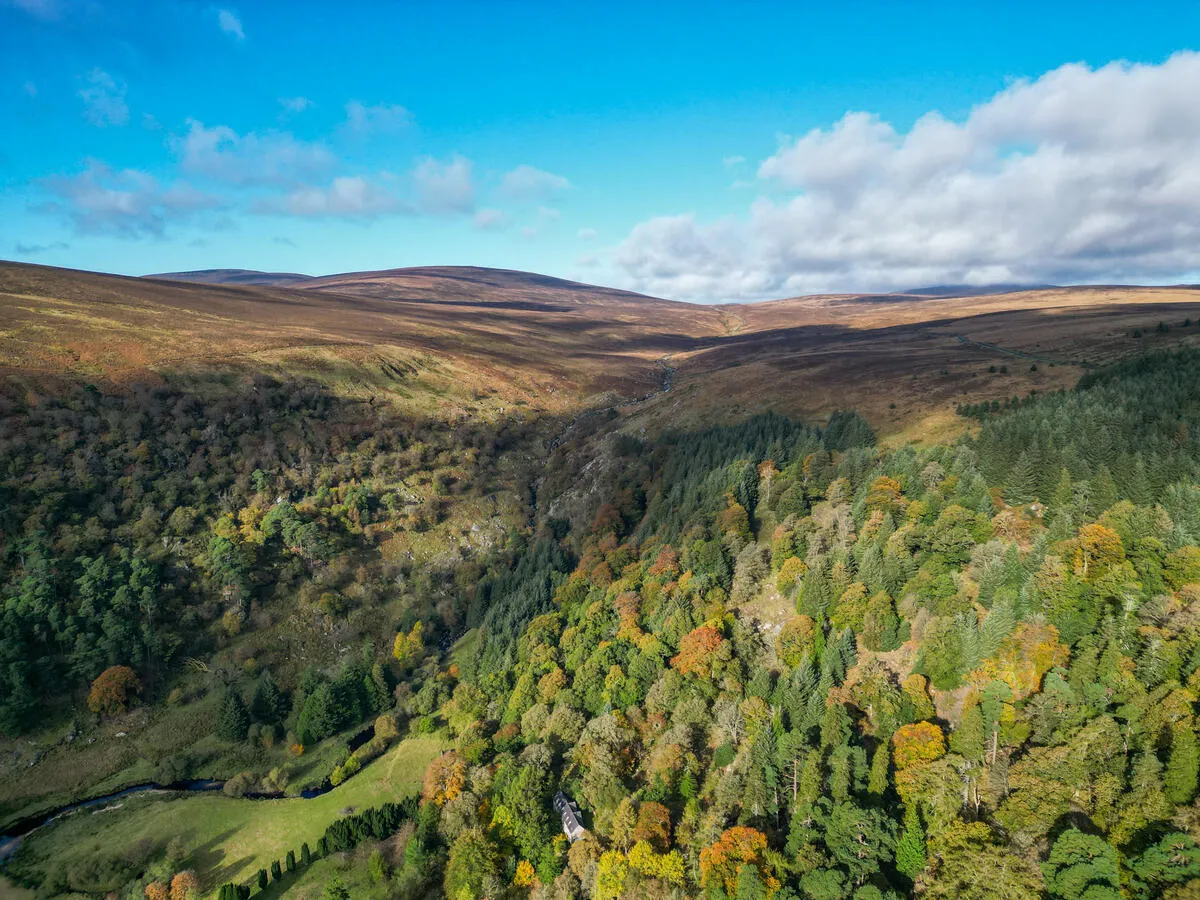
The Wicklow Mountains lie just south of Dublin, close enough for a day ride out of the city and big enough that you could spend a week here without repeating yourself. The name “Garden of Ireland” suggests something gentler than what you get on the high ground: bog, heathland, weather that turns while you are still climbing, and ramps of ten per cent on the Shay Elliott. The compensation is the traffic, or rather the lack of it. The minor roads here rarely see a coach.
Why Wicklow is a Cyclist’s Playground
- Proximity to Dublin: The mountain range is only 30–60 minutes by car from the city, making it ideal for weekend getaways or day rides.
- Varied terrain: From the steep 10 % gradients of the Shay Elliott climb to gentle rolling hills around the Blessington Lakes, routes range from easy 40-km loops to demanding 100-km mountain traverses.
- Scenic rewards: Panoramic views of Lugnaquilla (Ireland’s highest peak outside Kerry at 925 m), glacial valleys, waterfalls such as the Glenmacnass, and the historic monastic site at Glendalough.
- Low traffic: A network of minor roads that rarely see coach traffic, so you can ride two abreast for long stretches.
- Heritage: Ancient monastic ruins, the highest Irish waterfall at Powerscourt, and villages like Laragh, Enniskerry and Roundwood to break the ride up.
Signature Road-Bike Routes
Five routes, all starting from Laragh (home to the Glendalough Green Café). Distances and total ascent are approximate, and every one of them can be cut short or extended.
1. Shay Elliott & Slieve Maan Loop: 59 km, 980 m ascent
- Highlights: The historic Shay Elliott climb (named after Ireland’s first Tour de France stage winner), memorial to the legend, sweeping views of Lugnaquilla.
- Route: From Laragh head south on the R755, turn right onto the Military Road (R115) toward Glenmalure. Climb steadily through farmland and coniferous forest, finishing with a 10 % ramp to the summit. Descend back to Laragh via Aughavannagh and Aughrim.
- Difficulty: Moderate to hard; suited to cyclists comfortable with sustained climbs.
2. Glenmacnass & Sally Gap: 63 km, 870 m ascent
- Highlights: Glenmacnass Waterfall, Sally Gap (500 m high pass), German WW2 war cemetery near Glencree.
- Route: Depart Laragh on the R115, pass the waterfall, climb to Sally Gap, then head east to Glencree for a coffee stop at the former barracks. Continue south to Enniskerry, loop via Long Hill to Roundwood and return via the R755.
- Difficulty: Moderate; the Sally Gap climb is steady but not overly steep.
3. Roundwood & Rathdrum Figure-of-Eight: 48 km, 520 m ascent
- Highlights: Vartry Reservoir (supplies Dublin’s water), historic cafés in Roundwood and Rathdrum, optional detour up the Shay Elliott climb.
- Route: Follow the R755 to Roundwood, then a series of minor roads through Anamoe, Derrylossary and Moneystown before reaching Rathdrum. Return via the R755. Add the Glenmalure turn-off for an extra climb if desired.
- Difficulty: Easy to moderate; a relaxed day unless you add the extra climb.
4. Wicklow Gap: Sally Gap Loop, 70 km, 1 000 m ascent
- Highlights: Two mountain passes, Turlough Hill hydro-electric scheme, Blessington Lakes, long open valleys.
- Route: From Laragh, head west on the R756 to the Wicklow Gap, descend to Valleymount and the Blessington Lakes, then follow the R759 to Sally Gap before a fast 19-km descent back to Laragh.
- Difficulty: Hard; includes two long climbs and significant total elevation gain.
5. Dublin Bay to Howth: 37 km, 260 m ascent (optional coastal extension)
- Highlights: Scenic coastal path, Bull Island nature reserve, Howth Harbour, excellent cafés.
- Route: Cycle the dedicated Dublin Bay cycleway from Clontarf to Sutton, cross the wooden bridge at Dollymount onto Bull Island, then follow the shoreline to Howth. Return via the same route or take the hill-top loop around Howth for extra climbing.
- Difficulty: Easy; great for a relaxed ride after a mountain day or as a warm-up.
When to Ride: Best Seasons and Weather Tips
Ireland’s maritime climate means weather can change quickly, but the Wicklow Mountains are most pleasant in late spring (May–June) and early autumn (September–October). Average temperatures range from 12 °C to 17 °C, and daylight lasts 14–16 hours, giving plenty of riding time.
- Spring: Wildflowers bloom, fewer tourists, mild rain.
- Autumn: Golden foliage, crisp air, still good road conditions.
- Winter: Snow is rare but possible on higher passes (e.g., Wicklow Gap). If you ride in winter, equip your bike with wider tyres and carry extra warm layers.
- Summer: Longer days but also the busiest period; expect more traffic on main roads and at Glendalough.
Tip: Always carry a waterproof jacket, arm warmers and a packable emergency blanket, the mountains can produce four seasons in a single day.
Where to Stay: Bases for Exploring the Mountains
Laragh (the cyclist’s hub)
- Bramble Rock B&B: Cozy rooms, hearty Irish breakfasts, bike-friendly parking.
- Pinewood Lodge B&B: Quiet woodland setting, secure bike storage.
- Wicklow Heather Restaurant: Offers a restaurant with a dedicated cyclists’ menu and a small garage for bike maintenance.
Laragh’s central location means you can start most routes without back-tracking, and the village’s cafés (e.g., the Glendalough Green Café) provide reliable Wi-Fi for route planning.
Enniskerry
- Poppies Café: Popular with cyclists for its hot coffee and sandwiches.
- The Glendalough Hotel: Comfortable rooms, on-site bike rack, easy bus links to Dublin.
Coastal Towns: Bray & Greystones
Both towns are on the DART line, making them ideal if you prefer public transport. They offer a range of hotels, B&Bs and bike shops (see below). The sea-side promenade provides a pleasant warm-down ride after a mountain day.
Dublin
If you’re flying in or prefer a city base, stay on the south side (e.g., Ballsbridge) or in Dun Laoghaire for quick access to the Dublin Mountains and the R115 Military Road.
Bike Shops & Service Points
| Location | Shop | Services | Contact |
|---|---|---|---|
| Greystones | Cycleplus | Full service, bike fitting, spare parts | 086 818 1573, mechanic@cycleplus.ie |
| Bray | Everest Cycles | Repairs, custom builds, accessories | 01 282 8660, sales@everestcycles.ie |
| Laragh | Laragh Bike Hub (seasonal pop-up) | Minor repairs, tyre inflators, pump | Usually open during summer months, check local notice boards |
| Dublin (city centre) | BikeZone | Comprehensive workshop, touring gear | 01 879 1234, info@bikezone.ie |
Essential Gear & Packing Checklist
- Bike: A road bike with a compact or semi-compact crankset (to handle 10 % climbs). Wider 28-32 mm tyres improve comfort on rough tarmac.
- Clothing: Waterproof jacket, breathable base layers, arm/leg warmers, cycling gloves, and a lightweight cap.
- Repair Kit: Spare tubes, tyre levers, multi-tool, CO₂ cartridges or mini-pump, puncture kit, and a spare chain link.
- Navigation: Smartphone with offline maps (e.g., Ride with GPS), a physical OSI 1:50 000 map (Sheets 56 & 62), and a portable power bank.
- Safety: Helmet, high-visibility vest, lights (front 500 lumens, rear 200 lumens), and a basic first-aid kit.
- Nutrition: Energy bars, electrolyte drink, and a reusable water bottle (at least 1 L).
- Extras: Sunscreen, insect repellent, and a small dry bag for valuables.
Practical Tips for a Smooth Ride
- Check Road Conditions: Minor roads can be resurfaced intermittently. A quick glance at local council websites or a phone call to the nearest bike shop can confirm current conditions.
- Start Early: Popular routes (e.g., Wicklow Gap) see increased traffic after 10 am, especially in summer. Early starts give quieter roads and better lighting for photography.
- Stay Connected: Mobile coverage is generally good, but some remote sections may be patchy. Share your route and estimated return time with a friend.
- Respect the Environment: Stick to designated roads and follow the “Leave No Trace” principles. Many areas are protected habitats (bog, heathland, coniferous forest).
- Use Public Transport Where Possible: If you’re based in Dublin, the DART can take you to Bray or Greystones, and a local bus (e.g., 133) reaches Laragh on weekdays.
Attractions Along the Routes
- Glendalough Monastic Site: Early medieval ruins set beside two lakes. Busy by midday in summer, so time it early.
- Powerscourt Waterfall: Ireland’s highest waterfall (121 m); accessible via a short detour from Enniskerry.
- Lugnaquilla Summit Views: From the Glen of Imaal route you can glimpse the 925 m peak, the highest point in Leinster.
- Blessington Lakes: A quiet lake district, and somewhere to sit down after the Wicklow Gap.
- Sally Gap Visitor Centre: Provides information on the geology and history of the area, plus a café with hearty Irish fare.
Cycling Events in Wicklow
- Wicklow 200: A challenging 200 km sportive held each May, attracting both elite and amateur cyclists.
- Wicklow 100: A shorter 100 km version for those seeking a less demanding but still rewarding ride.
- Local Club Rides: Dublin Wheelers, Bray Wheelers and Naas Cycling Club run regular group rides into the mountains, often on Saturday mornings.
Getting There: From Ireland and Beyond
- By Air: Dublin Airport is the nearest international gateway (≈ 45 km to the mountains). Car hire is readily available; many hire firms offer bike racks.
- By Ferry: Irish Ferries and Stena Line connect Holyhead (Wales) and Rosslare (Co. Wexford) to Dublin.
- By Car: Take the M50 southbound, exit at Junction 13 (Kilcullen), then follow the R747 to Laragh. Parking is available at the Glendalough Green Café (small fee).
- By Public Transport: The DART to Bray or Greystones, then a local bus (e.g., 133) to Laragh. Check the latest timetables on the Dublin Bus website.
Safety and Emergency Information
- Emergency Number: Dial 112 (or 999) for ambulance, fire or police.
- Medical Facilities: The nearest hospital is St. Vincent’s in Dublin (≈ 45 km). Smaller health centres are in Wicklow town and Greystones.
- Cyclist Groups: Riding in pairs or small groups is strongly recommended, especially on remote sections.
- Trail Etiquette: Give way to pedestrians on shared paths, and obey local signage.
Conclusion
Wicklow is a small range that rides bigger than it looks. Both the Wicklow Gap and the Shay Elliott take more out of you than the profile suggests, and the descent back into Laragh is long enough to get properly cold on. Ride in the milder months. Carry a jacket you can rely on, and start early, because the Wicklow Gap road fills up after ten in the morning in summer. Accommodation, food and a bike shop are all within reach of Laragh, which makes the logistics about as simple as Irish cycling gets.