Ireland's Ancient Monuments by Bike: Routes and Practicalities
The Boyne Valley Greenway, the Waterford Greenway and the Great Western trail all run past ancient sites. Routes, bike choice and how to visit well.
Introduction
Ireland’s ancient monuments are not gathered in one place. They sit in field corners and river valleys, often a few kilometres apart, reached by minor roads and, increasingly, by greenways laid over disused railway lines. A bike covers that ground at roughly the right speed. You can stop at a high cross, walk round a round tower, and still make a timed entry slot later in the morning.
Five routes follow, from the Boyne Valley to the Fermanagh border, along with the practical business of bikes, weather, beds and not damaging the things you came to look at.
Why Cycle Through History?
| Benefit | How it Enhances Your Experience |
|---|---|
| Pace control | You can stop whenever a sight catches your eye, whether it’s a high-cross or a hidden souterrain. |
| Eco-friendly | Greenways keep traffic off fragile sites, reducing vibration and pollution. |
| Physical health | A moderate ride (15-30 km per day) improves stamina, letting you explore more without fatigue. |
| Scenic immersion | The Irish weather, sea breezes and inland mist create a dramatic backdrop for ancient stonework. |
It is the slow way round, which is rather the point: fewer sites in a day, longer at each one.
Top Routes That Link Ancient Monuments
1. Boyne Valley Greenway: 30 km (future extensions up to 70 km)
The Boyne Valley is a cradle of Irish prehistory. The current 30 km greenway runs from Pass, County Meath to the Battle of the Boyne Visitor Centre and follows the River Boyne’s historic banks.
Key monuments
| Site | Era | Why visit |
|---|---|---|
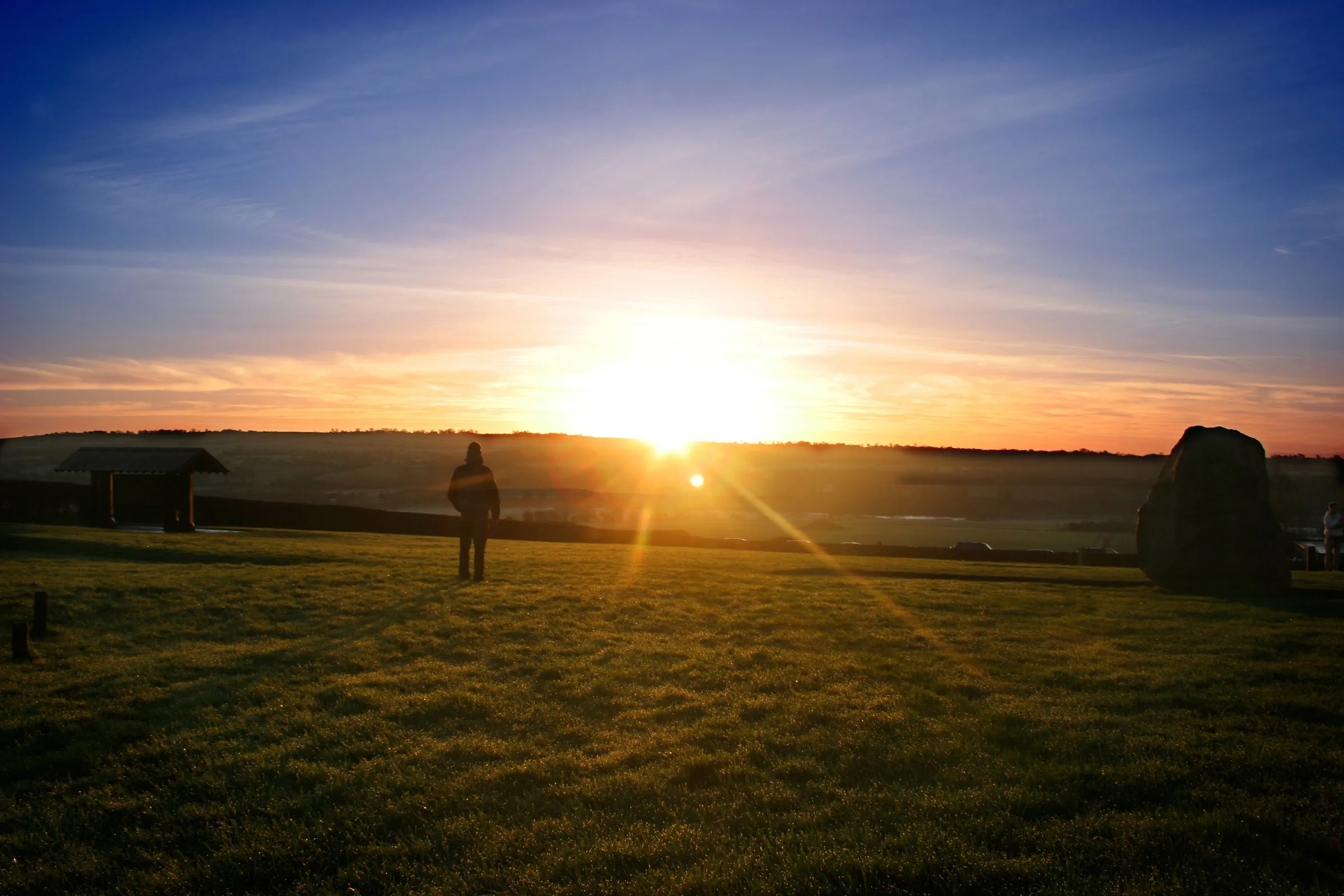
| Newgrange | Neolithic (c. 3200 BC), UNESCO World Heritage | One of the world’s oldest passage tombs; winter solstice illumination is spectacular. |
| Knowth | Neolithic (c. 3200 BC) | Twin mound complex with the largest collection of megalithic art in Europe. |
| Monasterboice | Early Christian (5th-7th c.) | High crosses and a round tower that illustrate early Irish Christianity. |
| Battle of the Boyne site | 1690 AD | Interpretive centre and monuments marking the decisive Williamite battle. |
Practicalities
- Surface: Smooth tarmac with short gravel sections; suitable for hybrid or gravel bikes.
- Facilities: Picnic areas at Drogheda and a café near the visitor centre.
- Parking: Secure bike racks at each trailhead; free car parking at the Battle of the Boyne centre.
2. Waterford Greenway: 46 km (Ireland’s longest greenway)
Running from Waterford city to Dungarvan, the Waterford Greenway follows the old Mallow-Waterford railway line. Old railway means shallow gradients the whole way, and it runs through the Copper Coast past several historic sites.
Key monuments
| Site | Era | Highlights |
|---|---|---|
| Reginald’s Tower | Viking (c. 914 AD) | The oldest civic building in Ireland; now a museum of Waterford’s maritime past. |
| Mount Congreve Gardens | 18th-19th c. | While not ancient, the gardens host a historic walled orchard and a 19th-century conservatory. |
| Granite Bridge (Kilmeaden) | 19th c. | Stone bridge with views of the River Suir and nearby monastic ruins. |
| Copper Coast UNESCO Global Geopark | Geological heritage (Precambrian) | Highlights ancient rock formations and fossil sites. |
Practicalities
- Surface: Mostly tarmac, with a 400 m tunnel and three viaducts.
- Visitor numbers: Over 250 000 users in its first year (2017); expect busy weekends in summer.
- Bike hire: Several towns (e.g., Dungarvan) offer gravel-bike rentals with helmets and pannier kits.
3. Great Western Greenway: 42 km, County Mayo
From Westport to Achill, this coastal trail hugs Clew Bay and passes historic towns and ancient stone structures.
Key monuments
| Site | Era | Highlights |
|---|---|---|
| Croagh Patrick (near Murrisk Abbey) | Early Medieval (15th c.) | Ruined friary with panoramic views of the Atlantic. |
| Murrisk Abbey | 15th c. | Well-preserved stonework; a peaceful stop before the mountain climb. |
| Achill Island forts | Iron Age (c. 500 BC) | Ring forts and promontory forts scattered across the island’s cliffs. |
| Westport House | 18th c. (built on a 13th-c. castle site) | Gardens and a museum detailing the Browne family and local history. |
Practicalities
- Surface: Tarmac and compacted gravel; suitable for road or gravel bikes.
- User stats: Approx. 172 000 cyclists per year (2013 study), expect moderate traffic.
- Accessibility: A new cycle hub with adaptive tricycles opened in Mulranny (Oct 2024).
4. Wild Atlantic Way: Select Coastal Segments (e.g., Donegal, Clare)
The Wild Atlantic Way is not a single greenway. Several designated cycling sections link the cliffs with ancient sites, and the trick is picking the ones that suit the days you have.
Notable stops
| Location | Monument | Era |
|---|---|---|
| Dunluce Castle (County Antrim) | Norman castle ruins | 13th c. |
| Poulnabrone Dolmen (County Clare) | Portal tomb | c. 2500 BC |
| Cliffs of Moher Visitor Centre | Medieval monastic settlement nearby | 6th-7th c. |
| Glenveagh National Park (Donegal) | Ring forts and stone circles | Iron Age |
Tips for the Atlantic Way
- Choose segment routes such as the Donegal Coastal Loop (≈ 120 km) or the Clare Coastal Trail (≈ 85 km) for manageable day rides.
- Expect variable weather; pack waterproof panniers and wind-proof clothing.
5. The Kingfisher Trail: Off-the-Beaten-Path (Fermanagh & Cavan)
A quieter 60-km loop crossing the Marble Arch Caves Global Geopark and Enniskillen Castle.
Highlights
- Marble Arch Caves: UNESCO-recognised karst landscape with guided underground tours.
- Enniskillen Castle: 16th-century fortification now housing the Fermanagh County Museum.
- Ancient cairns scattered across the Cavan-Leitrim border.
Practical Planning Tips
Bike Choice
| Terrain | Recommended Bike |
|---|---|
| Paved greenways (Boyne, Waterford, Great Western) | Hybrid or gravel bike with 2×8-10 speed drivetrain. |
| Mixed tarmac/gravel (Coastal Wild Atlantic Way) | Gravel bike with wider 40-45 mm tyres. |
| Rough off-road (Kingfisher Trail) | Cyclocross or mountain bike with front suspension. |
Essential gear
- Helmet (mandatory on most greenways).
- Pannier system: 20-30 L total capacity for water, snacks, a light rain jacket and a portable lock.
- Repair kit: spare tube, CO₂ cartridge, multi-tool, tyre levers.
- GPS/phone mount: offline maps (e.g., Komoot, Ride with GPS) work well where mobile signal fades.
Navigation & Maps
- Official greenway websites provide downloadable GPX files (Boyne Greenway, Waterford Greenway, Great Western).
- Irish National Trails app offers offline topographic maps for the Wild Atlantic Way.
- Ordnance Survey Ireland (OSI) 1:25 000 maps are invaluable for off-road sections.
Accommodation
| Route | Types | Typical cost (per night) |
|---|---|---|
| Boyne Valley | B&Bs in Drogheda, Meath heritage inns | €80-€120 |
| Waterford Greenway | Guesthouses in Waterford, Dungarvan hostels | €70-€130 |
| Great Western | Rural farm stays, Westport boutique hotels | €90-€150 |
| Wild Atlantic Way | Coastal cottages, surf-hostels | €85-€160 |
| Kingfisher Trail | Cavan-Leitrim B&Bs, caravan parks | €60-€110 |
Booking tip: Book at least 4-6 weeks ahead for summer months (June-August). Many sites accept credit-card pre-authorisation but no deposit.
Weather & Clothing
- Irish climate is changeable; even in July, rain is common.
- Layering system: base layer (merino), mid-layer (fleece), outer shell (waterproof breathable jacket).
- Cycling shoes with waterproof overshoes protect against puddles on greenway bridges.
Respecting the Sites
- Stay on designated paths: many ancient monuments are fragile; stray wheels can damage earthworks.
- Leave no trace: pack out all litter, use designated bins where available.
- Follow opening hours: sites like Newgrange require timed entry; plan your ride to arrive early.
- Photography: flash is often prohibited inside tombs or churches.
Sample Itineraries
A. Two-Day Boyne Valley Explorer
| Day | Distance | Main Stops | Overnight |
|---|---|---|---|
| 1 | 15 km (Pass → Newgrange) | Newgrange (guided solstice tour), Knowth, Boyne River walk | Drogheda B&B |
| 2 | 15 km (Drogheda → Battle of the Boyne) | Monasterboice high crosses, Battle of the Boyne visitor centre | Return to Dublin or stay in Meath |
Total ride time: ~3-4 hours each day, leaving plenty of time for site visits.
B. Three-Day Waterford Greenway Adventure
| Day | Distance | Highlights | Overnight |
|---|---|---|---|
| 1 | 20 km (Waterford → Kilmeaden) | Reginald’s Tower, Kilmeaden granite bridge, Suir river views | Kilmeaden guesthouse |
| 2 | 15 km (Kilmeaden → Mount Congreve) | Mount Congreve Gardens, copper-coast geology stop | Dungarvan hostel |
| 3 | 11 km (Dungarvan → Dungarvan) | Coastal cliff views, optional sea-kayak at Dungarvan Bay | Return to Waterford or onward travel |
Total ride time: 4-5 hours per day, with ample rest stops.
C. Five-Day Great Western Greenway & Achill Loop
| Day | Distance | Sites | Overnight |
|---|---|---|---|
| 1 | 12 km (Westport → Newport) | Westport House, Newport tunnel (optional) | Newport B&B |
| 2 | 10 km (Newport → Mulranny) | Mulranny cycle hub, Corraun Peninsula | Mulranny eco-lodge |
| 3 | 12 km (Mulranny → Achill) | Achill Island forts, Keel Beach | Achill guesthouse |
| 4 | 8 km (Achill loop) | Croagh Patrick summit (optional hike) | Return to Mulranny |
| 5 | 10 km (Mulranny → Westport) | Murrisk Abbey, scenic coastal views | Westport hotel |
Total ride time: ~2-3 hours daily; extra time for optional hikes to Croagh Patrick.
Sustainable Cycling Etiquette
- Yield to walkers on shared sections; ring your bell briefly before overtaking.
- Use designated bike parking at monument car parks, it reduces clutter and protects pathways.
- Support local economies: purchase souvenirs from craft shops, dine at family-run cafés, and consider guided heritage tours run by local historians.
- Leave the archaeology untouched: never climb on standing stones or touch delicate carvings.
Frequently Asked Questions
Q: Can I ride a e-bike on the greenways?
A: Yes, most Irish greenways permit electric assist bikes, provided they stay within the legal speed limit of 25 km/h and are equipped with a visible front light.
Q: Are there any fees for accessing the monuments?
A: Many sites (e.g., Newgrange, Croagh Patrick) charge a modest entry fee (€7-€12). The greenways themselves are free, though some parking areas may have a small charge.
Q: What is the best time of year to combine cycling and historic sites?
A: Late spring (May-June) and early autumn (September) offer mild temperatures, longer daylight, and fewer crowds at popular sites.
Q: Do I need a bike lock on the trails?
A: While theft is rare on isolated greenways, it’s advisable to bring a light U-lock for short stops at cafés or visitor centres.
Conclusion
None of these routes is hard riding. The limiting factor is time at the sites rather than distance on the bike, so plan shorter days than the mileage suggests. Check opening hours before you set out, since Newgrange in particular runs on timed entry, and carry a light lock for stops at cafés and visitor centres.
Rain is the other variable. It will probably rain at some point, and a wet stone circle in a headwind is a poor afternoon. Keep a spare day in the plan if you can.