Carlingford Greenway: Coastal Views and Ancient Legends in Louth
A 6-7 km run along Carlingford Lough with the bulk of Slieve Foy above you, passing medieval castles and the landscape behind the Finn McCool legends.
Introduction
The Carlingford Greenway runs along the southern shore of Carlingford Lough, from Carlingford to Omeath, on compact crushed stone. Fifty minutes on a bike. About two hours if you walk it. It is short and it is flat, and unlike a good many proposed Irish greenways it is actually built.
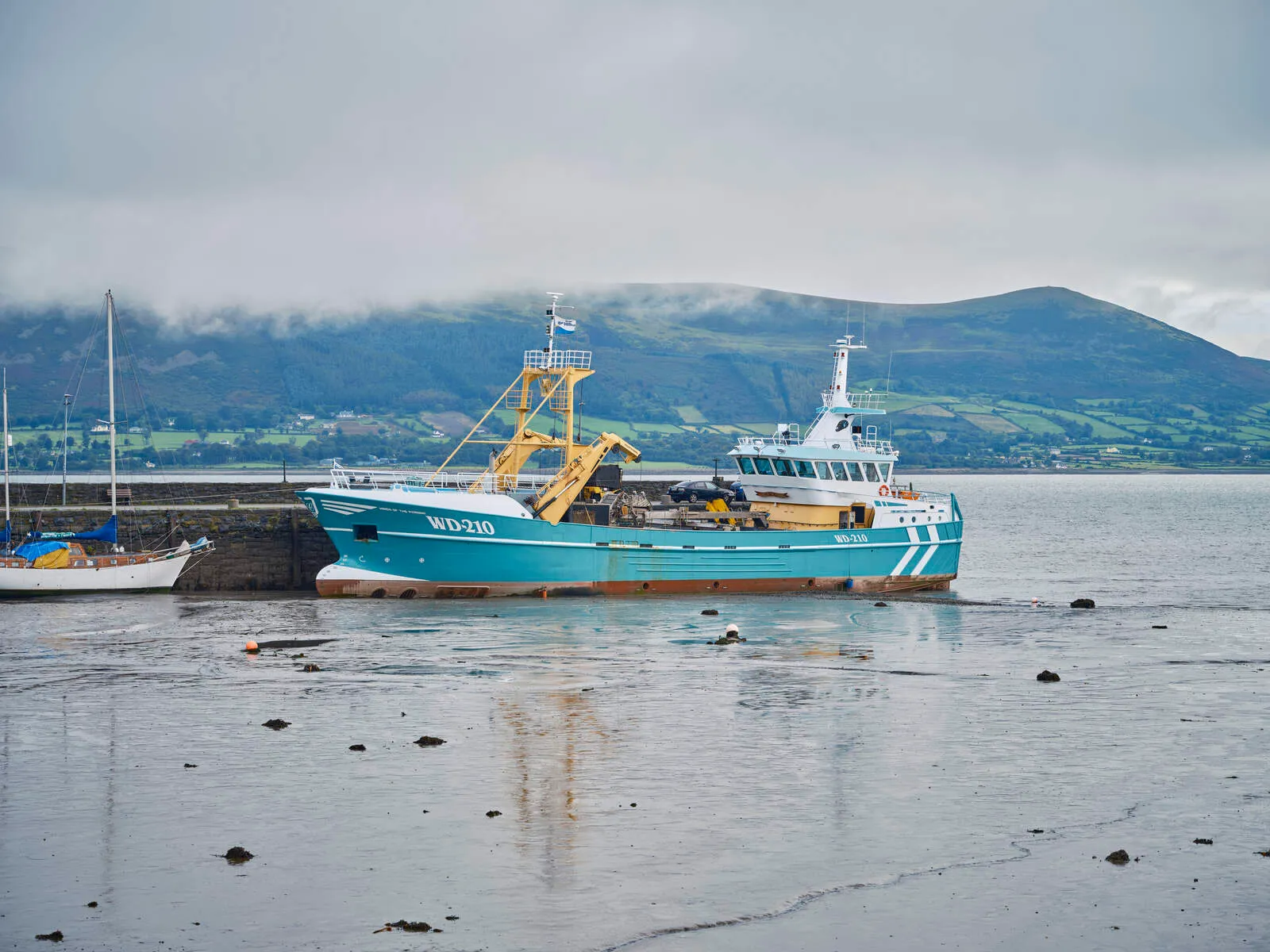
What you get for the fifty minutes: King John’s Castle near the start, open farmland and a wooded stretch in the middle, Slieve Foy filling the sky inland, and the Mourne Mountains across the water on a clear day. The mythology attached to every one of those landmarks is the other half of the appeal in County Louth.
Overview of the Greenway
| Feature | Details |
|---|---|
| Length | 6–7 km (Carlingford → Omeath) |
| Elevation | Mostly flat with gentle undulations; highest point under 50 m above sea level |
| Surface | Compact crushed stone, suitable for hybrid, road and e-bikes as well as walkers |
| Opening | Construction Sep 2016, Jan 2017; officially opened 2018 |
| Future extensions | Proposed Newry link (≈ 20 km) and a longer cross-border route to Greenore (> 50 km) |
| Average time | 50 min cycling, ~2 h walking (leisure pace) |
It was built in under four months. The route shadows the A1/N1 without ever putting you on it, running through farmland, wooded glens and along the shore of Carlingford Lough. Signposting is in Irish and English, and the local tourism office has a Google map if you want one, though it is difficult to get lost on a path with two ends.
Practical Information
Getting There & Parking
- Carlingford end: Limited paid parking at Carlingford Marina (≈ €2 per car, free for marina guests). Street parking is available but can fill quickly in summer.
- Omeath end: Free on-street parking near the village centre, ideal if you prefer to start the Greenway from the north.
- Public transport: Bus Éireann route 102 stops in Carlingford; the nearest train station is Dundalk (approximately 30 km north).
Bike Hire Options
| Provider | Location | Bike Types | Typical Rates |
|---|---|---|---|
| On Yer Bike | Near Carlingford Marina | Hybrid, road, e-bike | €12 (standard), €50 (full-day e-bike) |
| Escape HQ | Adjacent to Carlingford Library | Hybrid, e-bike, kids’ bikes | €15 (half-day), €22 (full-day) |
| Carlingford Greenway Bike Hire | South of King John’s Castle | Adult, teen, e-bike | €15 per 3 h (includes helmet, hi-vis vest, lock) |
All hire shops provide helmets, high-visibility vests and pannier bags, so you can travel light and stay safe.
Suggested Route & Waypoints
- Start at Carlingford Marina: Follow the sign-posted entry just past the restaurant on the right.
- Pass the historic King John’s Castle: A 13th-century fortification overlooking the lough.
- Cross the farmland near Ballyoonan: Open fields provide panoramic sea views.
- Traverse the wooded section at Knockangoran: Spot the occasional red-knot or gull.
- Arrive in Omeath: A small village with cafés, a beach, and a ferry link to Newry.
Feel free to reverse the direction; starting in Omeath gives you a gentle downhill finish into Carlingford.
Scenic Highlights
1. Carlingford Lough & the Cooley Peninsula
The lough sits in a glacial basin, and on a still morning it goes flat enough to hold a clean reflection of the hills. On a clear day you can see across to the Mourne Mountains in County Down, while the water itself is a haven for brown trout and salmon anglers.
2. Slieve Foy: “Carlingford Mountain”
At 589 m, Slieve Foy dominates the skyline and is visible throughout the Greenway. Known locally as the “sleeping giant”, its profile inspired legends of Finn McCool battling the winter spirit Ruscaire. The mountain’s summit offers a 360° vista of the lough, the Cooley Mountains, and the Irish Sea.
3. Medieval Castles & Ecclesiastical Sites
- King John’s Castle: Built c. 1205, the castle’s tower remains a striking landmark.
- St. Brigid’s Church ruins: A small, weather-worn stone church near the lough’s edge.
- Mullaghcarn Abbey (remains): Visible from a short detour off the Greenway, hinting at the area’s monastic past.
4. Agricultural Landscape
Rolling pastures divided by the traditional “drystone” walls that have marked out these fields for centuries. Wildflowers in summer. In winter it is bare and brown, and the wind comes straight off the water.
Legends and Mythology Along the Route
The Cooley Mountains are steeped in myth, many of which are tied directly to landmarks you’ll see on the Greenway.
Finn McCool and the Sleeping Giant
Irish folklore names Slieve Foy Sliabh Feá (“mountain of the woods”) but locals often call it Sliabh Fathaigh, “mountain of the giant”. Legend tells that the giant Finn McCool stood on the summit, hurling a massive stone across the lough to defeat his rival Ruscaire, the embodiment of winter. The stone supposedly landed at Cloughmore on Slieve Martin, still visible today.
Queen Maeve’s Gap
The narrow cleft known as Barnavave (“Maeve’s Gap”) is said to have been carved by the war-queen of Connacht, Queen Maeve, as a deliberate insult to the men of Cooley. She forced her army through the pass during the famed Táin Bó Cúailnge (Cattle Raid of Cooley), a central saga of the Ulster Cycle.
Cú Chulainn’s Trumpet Hill
Further east, the wooded slopes of Trumpet Hill recall the hero Cú Chulainn, who kept a watch-tower there. Each morning his trumpeter would sound a challenge to Queen Maeve’s forces camped at Bellurgan, signalling the start of a legendary battle for the Brown Bull of Cooley.
Viking Tales at Narrow Water
At the southern tip of the peninsula, the Narrow Water harbour was a Viking ship-fort in the 9th century. According to local lore, the Viking leader Hom’s daughter Isolde was betrothed to the King of Cornwall. The tragic love story of Tristan and Isolde, immortalised by Wagner’s 1865 opera, is said to have begun here.
Leprechauns and the Little-People Protection
In the 1990s a leprechaun-themed treasure hunt was introduced, and in 2009 the area around Slieve Foy was formally designated a protected zone for “flora, fauna, wild animals and little people” under the EU Habitats Directive, a whimsical nod to the region’s fairy folklore.
The Proposed Newry Greenway Link
A major development plan proposes extending the Carlingford Greenway across the border to Newry in County Down. When completed, the combined route will be roughly 20 km, taking 3½–4 hours to traverse by bike. This cross-border link would join the Carlingford-to-Omeath path with the Newry-to-Portadown Greenway, eventually forming a 50+ km corridor from Portadown to Greenore. The plan includes:
- New bridges over the River Newry.
- Additional historic sites such as the Newry Canal and Mourne Coastal Path.
- Enhanced tourism opportunities for both sides of the border.
Keep an eye on the Louth County Council website for updates on funding and construction timelines.
Tips for the Day
| Tip | Why It Helps |
|---|---|
| Start early in summer | Parking at the marina fills quickly; early light offers the best coastal photography. |
| Carry a waterproof jacket | The lough can be windy; weather changes fast along the water. |
| Bring a reusable water bottle | There are limited refill points; staying hydrated is essential for the gentle climbs. |
| Pack a picnic | The grassy knoll near Knockangoran is perfect for a seaside lunch with views of Slieve Foy. |
| Download the offline map | Mobile signal can be patchy in the glens; an offline map ensures you never lose the route. |
| Explore the legends | Use the Carlingford Heritage Centre’s brochure to locate “Maeve’s Gap” and “Trumpet Hill”, great for a storytelling walk. |
| Respect wildlife | The area is a designated habitat for birds and little-people alike, keep dogs on leads and stay on the path. |
Conclusion
This is a short trail and it will not fill a day on its own. Ride it in the morning, then walk up into the Cooley Mountains, take the ferry from Omeath, or spend the afternoon in Carlingford. Plenty of people just ride it twice, out and back, since the return into Carlingford is the downhill one.
Parking at the marina fills by mid-morning in summer. Bike hire starts at €12. County Louth has the Heritage Centre brochure if you want the stories that go with the landmarks: Finn McCool, Queen Maeve and Cú Chulainn, Barnavave, Trumpet Hill. The Newry extension is still only a proposal, so for now the ride ends at Omeath.