Dealing with Midges on an Irish Cycling Trip
Midges bite hardest at dusk in still air. The SMIDGE forecast, which repellents actually work, and the clothing and camp habits that help.
Introduction
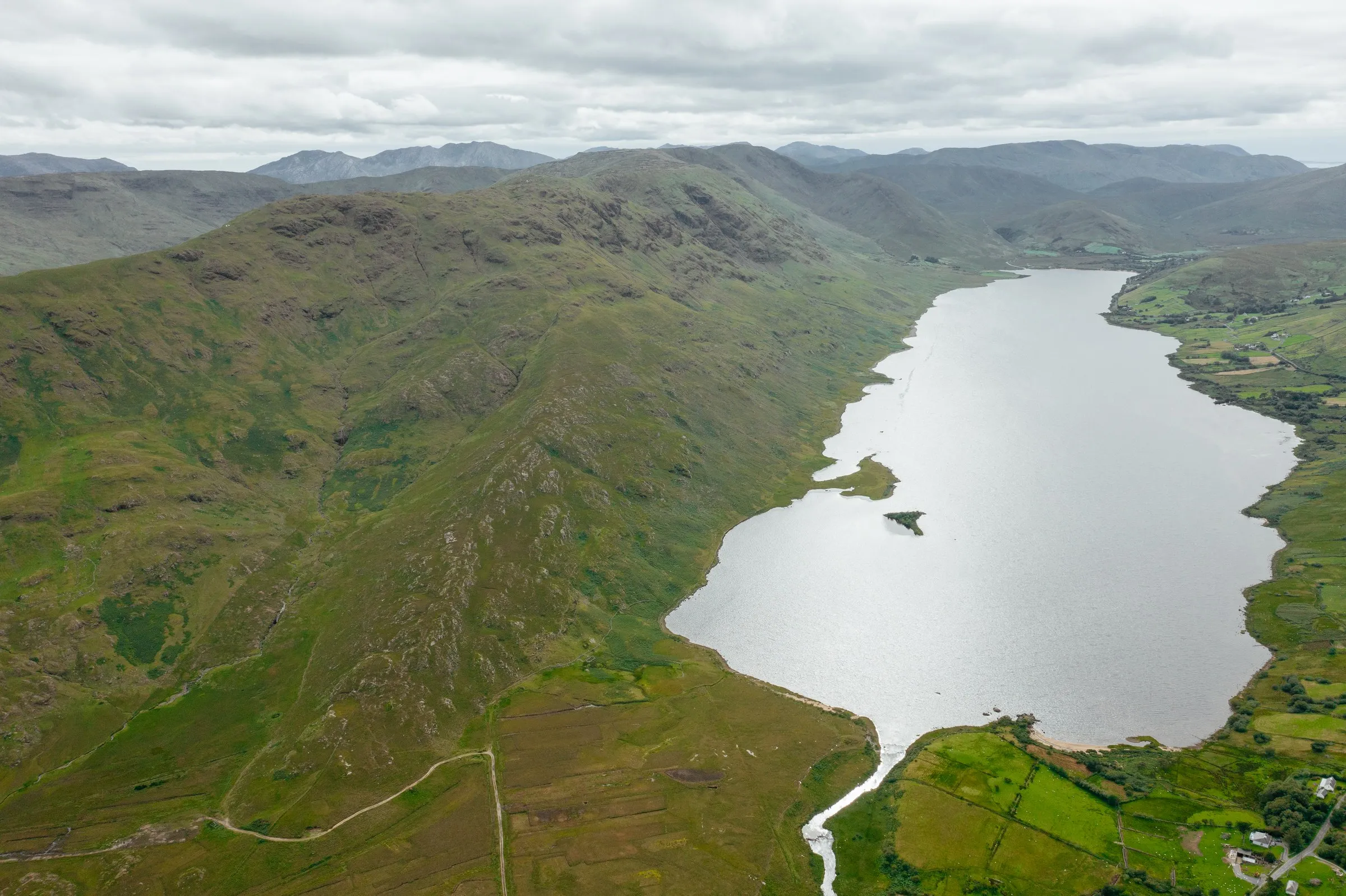
Stop pedalling on a still evening beside a bog in the west and you will know about it within thirty seconds. Midges, the tiny Culicoides flies that swarm at dusk, do not carry disease, but the bites itch for days and there can be hundreds of them. They are the reason a lot of people pack up camp early.
The useful thing about them is that they are predictable. They want damp ground, low light and still air, which means you can plan around them:
- Understand when and where midges are most active
- Choose the right repellents, clothing and accessories for bike touring
- Apply on-the-road tactics that keep you moving (and biting) less
- Treat bites quickly and effectively
1. The Biology of Irish Midges
| Fact | Detail |
|---|---|
| Main species | Culicoides impunctatus (the “highland midge”), responsible for >80 % of bites in the west and north. |
| Life cycle | Eggs hatch in damp soil or peat; larvae develop in wet vegetation; adults emerge after ~2 weeks when temperatures exceed 12 °C. |
| Season | Mid-May to early-September, with peak numbers in late May and early June. |
| Activity pattern | Most active at dawn (05:00-07:00) and dusk (20:00-22:00); they avoid bright sunshine and strong wind. |
| Population density | In hotspots such as Donegal’s Glenveagh National Park, trap counts regularly exceed 500 midges per trap per night (SMIDGE data 2024-2025). |
| Bite effects | Female midges bite once per pregnancy, injecting anticoagulant saliva. Typical reaction: 2-5 mm red papule, itching for 24-48 h; occasional swelling for sensitive individuals. |
| Disease risk | No known transmission of human disease in Ireland; they can spread livestock diseases (e.g., bluetongue), but this is irrelevant for cyclists. |
The timing is the part worth remembering. Dawn and dusk, damp ground, no wind. Get any one of those three wrong from the midge’s point of view and the swarm thins out considerably.
2. Forecasting the Threat: Using the SMIDGE Midge Forecast
The SMIDGE website (smidgeup.com) aggregates data from a network of light traps across the Republic of Ireland and Northern Ireland. It provides a colour-coded “Midge Level” for the next 3-day period:
| Level | Colour | Expected density | Recommended action |
|---|---|---|---|
| 0 | Green | Negligible | No extra measures needed. |
| 1 | Light blue | Low, occasional bites | Use basic repellent on exposed skin. |
| 2 | Yellow | Moderate, visible swarms | Apply strong repellent, wear head net. |
| 3 | Orange | High, dense clouds | Full protective kit (net, DEET, wind-break). |
| 4 | Red | Very high, severe swarms | Consider postponing the ride or choosing a coastal, windy route. |
How to use it:
- Check the forecast the night before you plan a ride.
- If the level is 2 or higher, schedule the ride for mid-day (when the sun is strongest) and aim for a windy, exposed ridge or coastal road.
- Download the SMIDGE app (available for iOS and Android) for real-time alerts while on the road.
3. Choosing the Right Repellent
3.1. Chemical repellents (most effective)
| Active ingredient | Typical concentration | Duration of protection | Notes for cyclists |
|---|---|---|---|
| DEET | 20-30 % (e.g., Jungle Formula, Autan) | Up to 6 h | Works on fabric; re-apply after heavy sweating. |
| Picaridin | 20 % (e.g., Sawyer Premium) | Up to 8 h | Odour-free, less oily than DEET. |
| Oil of Lemon Eucalyptus (PMD) | 30-35 % (e.g., Repel) | Up to 4 h | Natural-derived, but less effective in heavy wind. |
Application tips
- Apply to all exposed skin (face, neck, hands, forearms) 30 minutes before setting off.
- Re-apply after 2 hours of intense sweating or after a wash.
- For long bike-packing trips, carry a travel-size spray (30 ml) in a waterproof pouch.
3.2. Natural alternatives (for the eco-conscious)
- Citronella or eucalyptus oil: works best when applied to clothing, not skin.
- Lavender or peppermint essential oil: dilute 5 % in a carrier oil; may deter midges but offers limited protection.
- Apple cider vinegar spray: 1:1 mix with water; useful for repelling midges from bike bags and tents.
Note: Natural products are adjuncts, not replacements for DEET or picaridin in high-risk areas.
4. Clothing & Gear: Building a Midge-Proof Outfit
4.1. Fabric choice
| Feature | Recommended | Why it matters |
|---|---|---|
| Tight-weave | Polyester, nylon, or tightly woven merino | Prevents midges from piercing the fabric. |
| Light colour | Pastel blues, greens, greys | Dark colours attract more midges. |
| Long sleeves & trousers | Full-length, cuffed at the wrist/ankle | Reduces exposed skin surface. |
| Water-repellent finish | DWR-treated outer layer | Keeps sweat from soaking fabric, which can reduce repellent efficacy. |
4.2. Essential accessories
| Item | How to use |
|---|---|
| Midge head net | Wear over helmet; ensure no gaps at the back. Lightweight nets (e.g., Midge-Mesh) add <50 g. |
| Gloves | Fingerless gloves with long cuffs protect hands while retaining grip. |
| Neck gaiter | Pull over face; especially useful on steep climbs where you may pause. |
| Bike bag liners | Line pannier interiors with a thin repellent-treated fabric to keep gear bite-free. |
| Cycling sunglasses | Large-frame, wrap-around lenses block midges from the eyes. |
Pro tip: If you’re bike-packing, pack a lightweight, zip-up midge bivvy (e.g., Midge-Guard). It fits in a 20 L backpack and can be used for short rests at rest stops.
5. Riding Strategies: Out-Smarting the Swarm
- Ride during bright, windy periods: Midges struggle in winds >5 km/h. Choose routes with natural breezes (coastal roads, ridge tops).
- Maintain a steady speed: At >15 km/h most midges cannot keep up; they tend to linger on steep climbs or when you stop for a water break.
- Plan stops strategically: If you need to rest, do it in a wind-sheltered but open area (e.g., a small hilltop) rather than a damp, low-lying glen.
- Avoid still water: Lakes, bogs and riverbanks are midge hotspots. If your route follows a river, stay on the higher bank where wind is stronger.
- Use “midge-break” tactics: Pull the bike to a breezy spot, spin the wheels for a few minutes to create airflow, then continue.
- Group riding advantage: A larger group creates more turbulence, reducing midge density around each rider.
6. Bike-Packing & Multi-Day Tours
| Concern | Solution |
|---|---|
| Sleeping outdoors | Use a midge-proof bivvy or a mosquito net that can be attached to a bivvy sack. Keep the net sealed while sleeping. |
| Cooking stops | Set up a portable windscreen (e.g., a small pop-up canopy) to keep midges away from food and the cooking area. |
| Gear protection | Spray the inside of your panniers and tent with a diluted DEET solution (test on fabric first). |
| Water sources | Filter water as usual, but avoid drinking directly from stagnant pools where midges congregate. |
| Emergency repellent | Carry a small 10 ml DEET roll-on in a waterproof case for quick re-application after a long ride or rain. |
7. After-Bite Care: Quick Relief for Itchy Welts
- Clean the area: Wash with mild soap and cool water to remove saliva.
- Apply a cold compress: 5-10 minutes reduces swelling.
- Topical treatment: Use calamine lotion, hydrocortisone 1 % cream, or aloe vera gel.
- Oral antihistamine: Cetirizine 10 mg once daily (or as directed) helps control itching for the next 24 h.
- Avoid scratching: Scratching can lead to secondary infection; keep nails trimmed and consider a itch-relief band (e.g., Itch-Stop).
If swelling spreads beyond the bite site or you develop fever, seek medical advice, rare but possible allergic reactions.
8. Environmental Considerations
- Avoid blanket insecticide sprays: They can harm beneficial insects (bees, dragonflies).
- Choose reusable nets: Single-use plastic nets add unnecessary waste.
- Support local conservation: Many Irish parks run Midge Monitoring Programs; volunteers help set traps that improve forecast accuracy.
Midges are a problem to solve on your own skin, not on the bog. Treat yourself, not the landscape.
9. Checklist
| Item | Done? |
|---|---|
| Check SMIDGE forecast (3-day) | ☐ |
| Pack DEET or picaridin repellent (30 ml) | ☐ |
| Wear long, light-coloured, tight-weave clothing | ☐ |
| Bring a midge head net (compatible with helmet) | ☐ |
| Plan route for windy, sunny sections; avoid low-lying bogs at dusk | ☐ |
| Keep moving, aim for >15 km/h on open roads | ☐ |
| Carry after-bite kit (calamine, antihistamine) | ☐ |
| For bike-packing: pack bivvy/net and windscreen | ☐ |
Cross each box before you set off.
Conclusion
Most of this comes down to three habits. Check the forecast the night before, ride through the middle of the day rather than the ends of it, and keep your speed up on open ground. Repellent and a head net cover the rest, and they matter most in the ten minutes you spend standing still.
One thing worth accepting: on a red-level evening in a sheltered glen, no amount of kit makes it pleasant. That is the point at which you move to the coast, or ride somewhere else entirely.