Training for Irish Hills: How to Ride the Steep Stuff
Irish climbs are short, steep and often wet. A weekly training structure, the key sessions, and the gearing that makes Mount Leinster possible.
Introduction
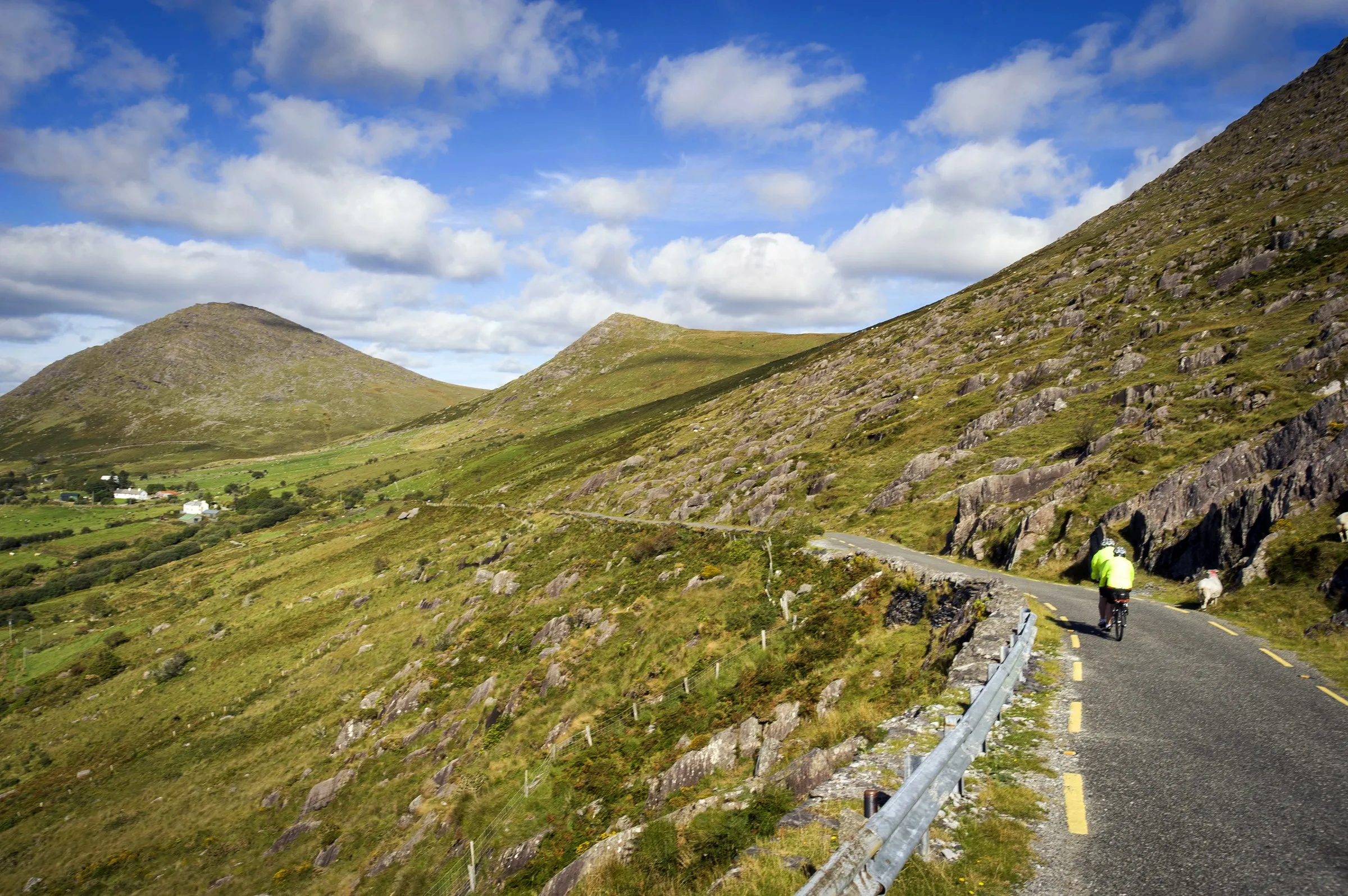
Ireland is famous for rolling green hills. That is only half the picture. The climbs here are short by continental standards, which fools people into underestimating them, and then the gradient goes up in the last kilometre. Mount Leinster, Scalp Mountain and the Connor Pass all punish riders who arrive undertrained.
What follows is an 8-week programme built around that shape of climb: short, hard efforts rather than long alpine drags. It assumes you already ride gradients of 10 % + and want to stop dreading them.
1. Understanding the Irish Climb Landscape
1.1 Typical Irish Climb Statistics
| Metric | Typical Value | Notable Example |
|---|---|---|
| Average length | 4.2 km | - |
| Average total ascent | 207 m | - |
| Average gradient | 5–7 % | - |
| Steepest gradient | 13 % (Mount Leinster) | - |
| Hardest climb (difficulty score) | 510 (Scalp Mountain, 5.9 km at 7.9 %) | - |
These figures come from the ClimbFinder database, which lists 162 recognised climbs across the Republic and Northern Ireland. While many rides feature gentle rolling, the “toughest” climbs demand sustained power output for 15–30 minutes at high heart-rate zones.
1.2 What Makes Irish Climbs Unique?
- Variable Weather: Even in summer, you can face headwinds, rain, or cold temperatures, which increase perceived effort.
- Short but Steep Sections: Many climbs have a “punchy” gradient (10–13 %) for the final kilometre, requiring anaerobic capacity.
- Mixed Surfaces: Expect tarmac, narrow country lanes, and occasional gravel. Bike handling skills matter as much as raw power.
- Scenic Distractions: The coastal and mountain views will tempt you to freewheel. On a training ride, don’t.
2. The Physiology of Hill Climbing
2.1 Energy Systems
| System | Duration | Primary Fuel | Training Focus |
|---|---|---|---|
| Aerobic (Oxidative) | >10 min | Fat + Carb | Long steady rides, base miles |
| Anaerobic (Lactic) | 2-10 min | Carb | Threshold intervals, hill repeats |
| Phosphagen (ATP-PCr) | <30 s | Stored ATP/PCr | Explosive sprints, gear-shifts |
Climbing in Ireland usually sits in the aerobic-threshold zone (70-85 % of FTP) with occasional spikes into the anaerobic zone on steep gradients.
2.2 Power Requirements
A rider weighing 75 kg (including bike) aiming for a 10 % gradient needs roughly 250 W to maintain a moderate speed (≈15 km/h). On a 13 % gradient (Mount Leinster) the same rider must push ≈340 W. Understanding your Functional Threshold Power (FTP) helps you set realistic training zones.
3. Building a Hill-Training Programme
The following 8-week plan assumes a rider with a base of at least 150 km/week and an FTP of 200 W. Adjust the volume up or down by 10 % depending on your current fitness.
3.1 Weekly Structure Overview
| Day | Session | Focus | Example |
|---|---|---|---|
| Mon | Rest or active recovery | Recovery | 45 min easy spin, <55 % FTP |
| Tue | Threshold intervals | Anaerobic capacity | 4 × 8 min @ 95-100 % FTP, 4 min recovery |
| Wed | Endurance ride | Aerobic base | 2-3 h @ 65-75 % FTP, mixed terrain |
| Thu | Hill repeats (short) | Power & cadence | 6 × 2 min @ 110-120 % FTP on 3-5 % hill |
| Fri | Strength & core (off-bike) | Muscular endurance | 45 min, squats, dead-lifts, planks |
| Sat | Long climb ride | Real-world practice | 1-2 h ride including a 10-km climb |
| Sun | Easy spin or group ride | Social / active recovery | 1-1.5 h @ 60-70 % FTP |
3.2 Detailed Session Descriptions
3.2.1 Threshold Intervals (Tuesday)
- Warm-up: 15 min easy + 5 min cadence drills (90-100 rpm)
- Main set: 4 × 8 min at 95-100 % FTP (just below “hard” effort). Keep heart-rate in Zone 4.
- Recovery: 4 min easy spin between repeats.
- Cool-down: 10 min.
Why: Improves lactate clearance and raises the power you can sustain on long gradients like Scalp Mountain.
3.2.2 Hill Repeats (Thursday: Short)
- Find a 2-km hill with a 4-6 % gradient.
- 6 × 2 min effort at 110-120 % FTP. Aim for a cadence of 80-90 rpm to train pedal efficiency.
- Descend slowly for recovery (2-3 min).
- Total session: ~60 min including warm-up/cool-down.
Why: Mimics the steep final kilometres of climbs such as Mount Leinster and builds neuromuscular power.
3.2.3 Long Climb Ride (Saturday)
- Choose a classic Irish climb: Scalp Mountain (5.9 km, 7.9 %), Mount Leinster (2.6 km, 13.3 %), or Connor Pass (7.1 km, 5.6 %).
- Ride at a steady 70-80 % FTP for the entire ascent, focusing on consistent cadence and breathing.
- Use this ride to practise nutrition, bike positioning, and gear selection.
3.2.4 Strength Training (Friday)
| Exercise | Sets | Reps | Load |
|---|---|---|---|
| Back squats | 3 | 8-10 | 60-70 % 1RM |
| Romanian dead-lifts | 3 | 8-10 | moderate |
| Single-leg press | 3 | 12 each | light-moderate |
| Plank variations | 3 | 60 s each | bodyweight |
| Farmer’s walk | 2 | 30 m | moderate dumbbells |
Why: Improves pedal force, reduces fatigue on long climbs, and supports lower-back health for the hunched road position.
3.3 Progression & Taper
- Weeks 1-4: Build volume; keep intensity moderate.
- Weeks 5-6: Increase interval intensity (up to 115 % FTP) and add an extra hill repeat.
- Week 7: Reduce volume by 20 % while keeping intensity high, “hard-easy” week.
- Week 8: Taper, cut total hours by 40 % and focus on short, sharp efforts; rest well before your target climb.
4. Nutrition for Hill Days
| Timing | What to Consume | Reason |
|---|---|---|
| Pre-ride (30-60 min) | 250-300 kcal, 60 % carbs, 15 % protein (e.g., banana + oat bar + coffee) | Fill glycogen stores, boost alertness |
| During climb (>60 min) | 30-60 g carbs per hour (energy gels, fruit, or sports drink) + 200-300 ml water | Maintain blood glucose, prevent dehydration |
| Post-ride (within 30 min) | 1:3 protein-to-carb (e.g., whey shake + toast) + electrolytes | Accelerate recovery, replenish salts lost in rain or wind |
Hydration tip for Ireland: Even on cool, rainy days you lose fluid through sweat. Aim for 500 ml of fluid per hour, adjusting for wind chill.
5. Bike Set-up for Irish Climbs
| Component | Recommendation |
|---|---|
| Gear ratios | Compact crank (50/34) + 11-23 cassette gives a low 28-30 % gear, ideal for 13 % gradients. |
| Wheelset | Lightweight 25 mm rims with low-profile tires (23-25 mm) for reduced rolling resistance; consider tubeless for puncture protection on wet roads. |
| Handlebars | Drop bars with a comfortable reach; add a bar-end or aero bar for a more aerodynamic position on longer climbs. |
| Pedals | Clipless (Look Keo or Shimano SPD-S) for efficient power transfer. |
| Clothing | Layered system: breathable base, wind-proof jacket (water-resistant), and leg warmers for cooler mornings. |
6. Safety & Weather Considerations
- Check the Forecast: Irish weather can change rapidly. Use Met Éireann or a reliable app; carry a lightweight waterproof jacket.
- Visibility: Wear high-visibility clothing and use front/back lights even in daylight on foggy days.
- Descents: Practice braking on wet surfaces; keep a safe speed and use both front and rear brakes evenly.
- Road Surface: Many Irish climbs include narrow, uneven tarmac. Keep a relaxed grip and anticipate potholes.
- Emergency Kit: Mini-pump, spare tube, multi-tool, and a small first-aid pouch are essential.
7. Sample “Climb-Specific” Training Week (Mid-Programme)
| Day | Ride | Details |
|---|---|---|
| Mon | Rest | Light stretching |
| Tue | Threshold Intervals | 4 × 10 min @ 98 % FTP, 5 min recovery |
| Wed | Endurance | 2 h @ 70 % FTP, include 30 km of rolling hills |
| Thu | Hill Repeats | 8 × 2 min @ 115 % FTP on a 5 % climb, 3 min descent |
| Fri | Strength | Squats, dead-lifts, core (45 min) |
| Sat | Long Climb Ride | 1 h ride to Scalp Mountain, steady 75 % FTP, test nutrition |
| Sun | Group Spin | 1 h easy, social, keep cadence high (90 rpm) |
8. Tracking Progress
- Power Meter: Record average power and Normalised Power (NP) on each climb.
- Heart-Rate Zones: Aim to stay in Zone 4 on long climbs, Zone 5 during short steep bursts.
- Perceived Exertion: Use the Borg scale (6-20) to gauge effort; a climb should feel around 15–17 on a tough day.
- Post-Ride Logs: Note weather, gear used, nutrition, and how you felt. Patterns will highlight strengths and gaps.
Conclusion
Eight weeks will not make you a climber. It will change what the last kilometre feels like, which is the part that decides whether you get over Mount Leinster or walk it. Do the threshold work, do the hill repeats, and do the strength sessions even though they are the least enjoyable hour of the week.
Train in the weather you will actually meet: wet tarmac, a headwind, a surface with potholes in it. And take the descents carefully. All of the above counts for nothing if you come off on the way down.