
What to Wear Cycling in Ireland: Dressing for the Weather
A four-layer system for wind and rain, set out season by season, plus the fabrics that dry fast and the ones that will leave you cold.
Introduction
Ireland’s weather is famous for its changeability: one minute you’re basking in a rare summer sun, the next you’re battling a head-on gale with rain lashing at your face. For cyclists, this means that the right clothing can be the difference between an enjoyable ride and a miserable slog. The climate figures below show why: rain is spread across all twelve months of the year, and the wind is more or less permanent. Everything after them is the four-layer system that copes with it, and which garments are worth paying for.
1. What the Irish Climate Looks Like on a Bike
| Month | Avg. Temp (°C) | Avg. Rainfall (mm) | Typical Conditions |
|---|---|---|---|
| Jan | 5.5 | 99 | Cold, windy, frequent showers |
| Feb | 5.6 | 66 | Similar to Jan, days just a touch longer |
| Mar | 7.1 | 95 | Early spring, mixed sun and rain |
| Apr | 8.6 | 72 | Milder, showers still common |
| May | 11.3 | 75 | Pleasant, increasing sunshine |
| Jun | 13.7 | 80 | Warmest days start, occasional rain |
| Jul | 15.5 | 87 | Warmest month, still changeable |
| Aug | 15.2 | 108 | Warm, but rain peaks |
| Sep | 13.2 | 100 | Early autumn, mild with showers |
| Oct | 10.2 | 129 | Wet and windy, cooling down |
| Nov | 7.5 | 120 | Cold, wet, daylight fading |
| Dec | 5.6 | 123 | Wintery, windy, frequent rain |
Source: The Irish Road Trip (2024), long-term Met Éireann averages.
Wind and Gale Frequency
Ireland’s exposure to the Atlantic means wind is a constant companion. The annual average wind speed across the country sits between 18–23 km h⁻¹ (≈ 11–14 mph). Coastal stations such as Malin Head record the highest averages (≈ 29 km h⁻¹) and also see ≈ 18 days per year with gale-force gusts (> 62 km h⁻¹). Even inland locations experience 10–14 gale days annually, so wind-proofing is essential year-round.
What This Means for Cyclists
- Temperature alone is deceptive: wind chill can make a 12 °C day feel like 6 °C.
- Rainfall is spread throughout the year, with October-December the wettest period.
- Visibility can drop quickly in mist or heavy rain; high-visibility clothing is a safety must.
- Layering is the only way to stay adaptable when conditions swing from sunshine to showers in a single ride.
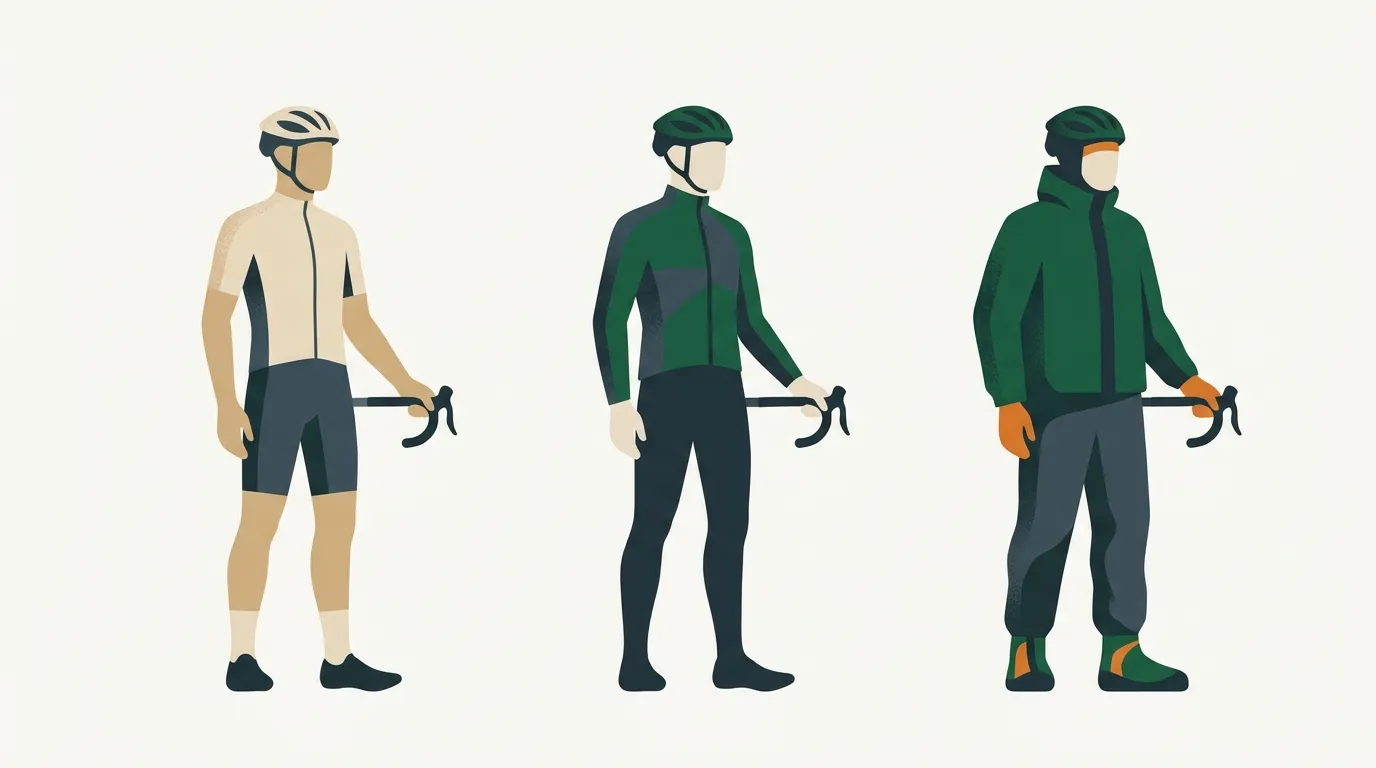
2. The Science of Layering: Your Four-Layer Toolkit
| Layer | Purpose | Ideal Fabrics | Key Features |
|---|---|---|---|
| Base | Moisture management & light insulation | Merino wool, polypropylene, polyester micro-fibre | Breathable, wicks sweat, odor-resistant, seamless construction |
| Mid | Insulation & wind-blocking | Fleece, soft-shell, insulated jackets (down or synthetic) | High warmth-to-weight ratio, some wind-proofing |
| Outer (Shell) | Weather protection (rain & wind) | 2-way breathable waterproof (Gore-Tex, eVent, Pertex) | Waterproof rating ≥ 10 000 mm, taped seams, vent flaps |
| Accessories | Extremities & visibility | Thermal gloves, wind-proof caps, waterproof overshoes, reflective gilets | Waterproof, insulated, touchscreen-compatible, high-vis panels |
How to Build a Ride-Ready Outfit
- Start with a fitted base layer: a long-sleeve top and leg warmers keep sweat off the skin.
- Add a mid-layer if the temperature is below 12 °C or wind is strong. A lightweight fleece works well for spring/autumn, while a thin insulated jacket (e.g., 40 g down) is better for winter.
- Top it with a waterproof shell on days with forecasted rain or wind speeds > 20 km h⁻¹. Look for a jacket with a pit-zip vent and a storm flap over the front zipper.
- Finish with accessories: a windproof cap or balaclava, waterproof gloves (with a silicone grip), and overshoes if you expect spray or puddles.
3. Clothing Recommendations for the Irish Seasons
3.1 Winter (December-February)
- Base: 100 % Merino long-sleeve top + leg warmers (thermal rating ~ 150 g m⁻²).
- Mid: 200 g synthetic insulated jacket (e.g., PrimaLoft) or heavyweight fleece.
- Shell: Fully waterproof, windproof shell (10 000 mm waterproof, 20 g m⁻² breathability). Taped seams are a must.
- Accessories: Waterproof, insulated gloves (e.g., Boardman Winter Gloves), windproof balaclava, helmet liner (helps retain ~ 10 % body heat), overshoes with a 3-mm waterproof membrane.
- Visibility: High-vis reflective jacket or gilet that can be worn over the shell.
Why: Average temps hover around 5 °C, wind speeds often exceed 20 km h⁻¹, and rain is frequent. Layering keeps you warm without overheating when you work up a sweat on climbs.
3.2 Spring (March-May)
- Base: Merino or polyester base layer (lighter weight, ~ 120 g m⁻²).
- Mid: Light fleece or soft-shell jacket. In March, a wind-proof soft-shell is valuable; by May a light insulated jacket may be optional.
- Shell: Water-resistant (not fully waterproof) soft-shell or a light rain jacket (5 000 mm rating), rain is common but storms are less intense.
- Accessories: Water-proof gloves (thin, touchscreen-compatible), cap or cycling cap under the helmet, UV-protective sunglasses as sunshine increases.
- Visibility: Reflective arm/leg bands; a bright-coloured jersey works well in the longer daylight.
Why: Temperatures climb from 7 °C to 12 °C, but wind and showers remain. A flexible mid-layer lets you shed or add warmth quickly.
3.3 Summer (June-August)
- Base: Short-sleeve or sleeveless technical base (dry-fit or lightweight merino) for sweat management.
- Mid: Often unnecessary; a light mesh vest for cooler mornings can be useful.
- Shell: Packable rain jacket (3 000 mm waterproof) for the occasional summer shower.
- Accessories: Ventilated gloves (or none on hot days), sun-hat with a visor, sunscreen, high-vis arm/leg bands for early evening rides.
- Cooling: Consider a neck cooling towel or gel-infused headband for temperatures above 20 °C.
Why: Average highs reach 15-16 °C, but Irish summer can swing to 30 °C during heatwaves. Light, breathable fabrics prevent overheating while still offering protection from sudden rain.
3.4 Autumn (September-November)
- Base: Merino long-sleeve (mid-weight) for lingering warmth.
- Mid: Fleece or soft-shell; the mid-layer becomes essential as temps drop below 12 °C.
- Shell: Waterproof shell with good breathability; storm flaps help when wind picks up.
- Accessories: Water-proof gloves, ear warmers or headband, overshoes if road spray is expected.
- Visibility: Autumn evenings come early, a reflective jacket or LED-lit vest improves safety.
Why: Rainfall peaks (120-130 mm) and wind speeds rise. The layering system lets you adapt to cooler mornings and milder afternoons.
4. Fabric Technology: What to Look For
| Fabric | Moisture-Wicking | Insulation | Waterproof Rating | Typical Use |
|---|---|---|---|---|
| Merino wool | Excellent (natural) | Good (light) | N/A | Base layer, cold-weather socks |
| Polyester micro-fibre | Excellent | Moderate | N/A | Base & mid layers |
| Polartec fleece | Good | High | N/A | Mid layer |
| Gore-Tex Pro | Good (when vented) | Low | 20 000 mm+ | High-performance shell |
| eVent | Excellent (high breathability) | Low | 10 000 mm+ | Everyday waterproof shell |
| TPU-laminated (cheap waterproof) | Poor | None | 5 000 mm | Budget rain jacket (use with vent) |
Key points for cyclists
- Breathability matters: a jacket that traps sweat will make you cold faster than wind alone.
- Seam taping prevents leaks where water can seep through stitching.
- Durability: look for abrasion-resistant panels on elbows and shoulders.
- Ease of repair: duct-tape patches or seam sealant can extend the life of a rain jacket on the road.
5. Practical Tips for Irish Cyclists
- Check the Met Éireann forecast 24 h before a long ride and note wind gusts. If gusts exceed 30 km h⁻¹, add a wind-proof mid-layer.
- Carry a lightweight pack-able shell even on summer rides, Irish showers are notoriously sudden.
- Use a “rain-ready” kit: a zip-off rain cape that fits over your jersey and pack, plus waterproof shoe covers. This can be stowed in a saddlebag (≈ 250 ml capacity).
- Layer for the back, not the front: the torso loses heat faster than the limbs, so prioritize a good base and mid-layer for the torso, and keep hands and feet insulated.
- Maintain visibility: attach reflective tape to the inside of your helmet, use bright-coloured socks, and consider a LED-lit rear light that flashes in wet conditions.
- Avoid cotton: it retains moisture, loses insulation when wet, and can cause chafing.
- Test gear on short rides before a big tour. The Irish weather can change within minutes; you’ll know whether a jacket vents enough or a glove is too bulky.
- Store gear properly: let wet clothing air-dry before putting it away to prevent mould, especially in damp Irish basements.
6. Gear Checklist by Ride Length
| Ride Length | Minimum Clothing Set |
|---|---|
| < 30 km (commute) | Merino base, wind-proof soft-shell, waterproof shell, waterproof gloves, reflective vest |
| 30-100 km (day tour) | Merino base, insulated mid-layer, waterproof shell, helmet liner, overshoes, high-vis jacket, pack-able rain cape |
| > 100 km (multi-day) | Merino base, dual mid-layers (fleece + insulated jacket), full-length waterproof shell, thermal gloves, balaclava, waterproof shoe covers, spare base layer for night rides |
7. Buying Guide: Where to Find Quality Irish Cycling Clothing
- Local bike shops (e.g., Halfords Ireland, Evans Cycles) often stock Irish-sized waterproof shells and can help you try on helmet liners and overshoes.
- Online specialists such as Cycling.ie, Performance Bike, and Wiggle UK ship to Ireland and offer a wide range of Merino base layers and Gore-Tex shells.
- Irish brands: Boardman, Ridge, and GOREWEAR Ireland provide climate-tested gear with local warranty support.
- Second-hand markets (e.g., DoneDeal, Facebook Marketplace) can be a budget-friendly way to acquire high-quality jackets, especially in the off-season.
Conclusion
None of this is complicated. Base, mid, shell, accessories, and the sense to look at the forecast before a long day out. Breathable waterproofs cost more, and they are worth it: a shell that traps your sweat will chill you just as quickly as the rain would have.
Carry the pack-able shell even when the sky looks settled. It weighs almost nothing, and Irish showers arrive without much notice. Keep something high-vis to hand as well, because the light goes early from September onwards and mist does the rest.