Wildlife Spotting on an Irish Cycling Holiday
Which birds and mammals you are likely to see, when in the year to look for them, and how to watch without disturbing them. Plus a 5-day loop.
Introduction
A bike makes a decent wildlife hide. You are quiet, you sit at hedge height, and in a morning you pass through more habitats than you could cover on foot in a day. The trade is that you are moving, so most of what you see, you see for about two seconds.
Sightings are never guaranteed. The routes below are here because they keep you beside good habitat for long enough that the odds tip your way, and because you can ride them without disturbing what you came to see. All information is current to 2025, drawing on recent bird-watching reports, the Irish Red List of mammals, and the latest trail updates from local tourism boards.
1. Choosing the Right Route: Where Birds and Mammals Meet the Bike
| Region | Highlighted Route | Key Wildlife | Best Season |
|---|---|---|---|
| Lough Derg (County Clare/Tipperary) | 130 km lakeside loop (Shannon–Lough Derg Greenway) | Mute swans, kingfishers, red squirrels, pine martens | Autumn (waterfowl migration) |
| Wicklow Mountains National Park | 90 km mountain trail via Glendalough & Glenmacnass | Red deer, buzzards, merlins, badgers, foxes | Early morning, May-July |
| Killarney National Park | 120 km Ring of Kerry cycle tour (including Gap of Dunloe) | Native red deer herd, golden eagles, otters, grebes | Autumn (rut) |
| Causeway Coast (Antrim) | 75 km coastal ride from Belfast to Derry (Giant’s Causeway, Rathlin Island) | Puffins, razorbills, seals, occasional dolphins | Late spring-early summer (seabird nesting) |
| Glenveagh National Park (Donegal) | 80 km rugged inland loop (Glenveagh Castle to Errigal) | Golden eagles (re-introduced), red deer, hares, stoats | Spring-early summer (bird activity) |
| Coastal Mayo & Connemara | 110 km Wild Atlantic Way segment (Westport → Clifden) | Corn crakes, red-billed choughs, otters, harbour porpoises | Winter (wetland birds) |
Why these routes? They are signposted greenways or low-traffic boreens, so you can look sideways without ending up in a ditch. Most are part of Ireland’s National Cycle Network, with parking, water points and guided options if you would rather have an expert eye along.
2. Species Spotting: The Feathered and Fur-Covered Highlights
2.1 Birds You’ll Likely See
Ireland hosts 522 recorded bird species (Irish Rare Birds Committee, 2023). On a typical cycling holiday, the following groups are the most reliable:
| Group | Representative Species | Identification Tips |
|---|---|---|
| Waterfowl & Shorebirds | Mute swan, greylag goose, Eurasian curlew, oystercatcher | Look for reflective bodies on lakes at dawn; listen for the curlew’s mournful “cur-lee-ew” on mudflats. |
| Birds of Prey | Common buzzard, merlin, golden eagle (Glenveagh) | Soar high over open moorland; use binoculars to spot the distinctive white-tailed buzzard on thermals. |
| Woodland & Forest Birds | Eurasian jay, great spotted woodpecker, common kingfisher (river stretches) | Listen for the jay’s rattling calls; watch for woodpecker drumming on dead oak trunks. |
| Seabirds | Atlantic puffin, razorbill, northern gannet (Causeway) | Visit cliffs at low tide; puffins are easier to see on breeding colonies (Rathlin Island). |
| Passerines (songbirds) | European robin, blackcap, skylark (waving displays) | Early mornings in hedgerows; skylark’s high-spirited flight is a classic Irish sight. |
Quick tip: Carry a lightweight pair of 8×42 binoculars (≈250 g). They provide enough magnification for distant seabirds without adding bulk.
2.2 Mammals You Might Encounter
Ireland’s 27 native terrestrial mammals are mostly shy, but several are regular on cycling routes:
| Species | Habitat | Where to Spot |
|---|---|---|
| Red deer (Cervus elaphus) | Forests, upland moorland | Wicklow Mountains, Killarney, Glenveagh (especially during the autumn rut). |
| European otter (Lutra lutra) | Rivers, lakes, coastal estuaries | Lough Derg banks, River Shannon, Connemara’s tidal creeks, look for spraints (otter droppings) on rocks. |
| Red fox (Vulpes vulpes) | Open countryside, farmland | Almost everywhere; most active at dusk. |
| European badger (Meles meles) | Woodland edges, hedgerows | Late evening on rural routes; look for setts (burrow entrances) near ancient trees. |
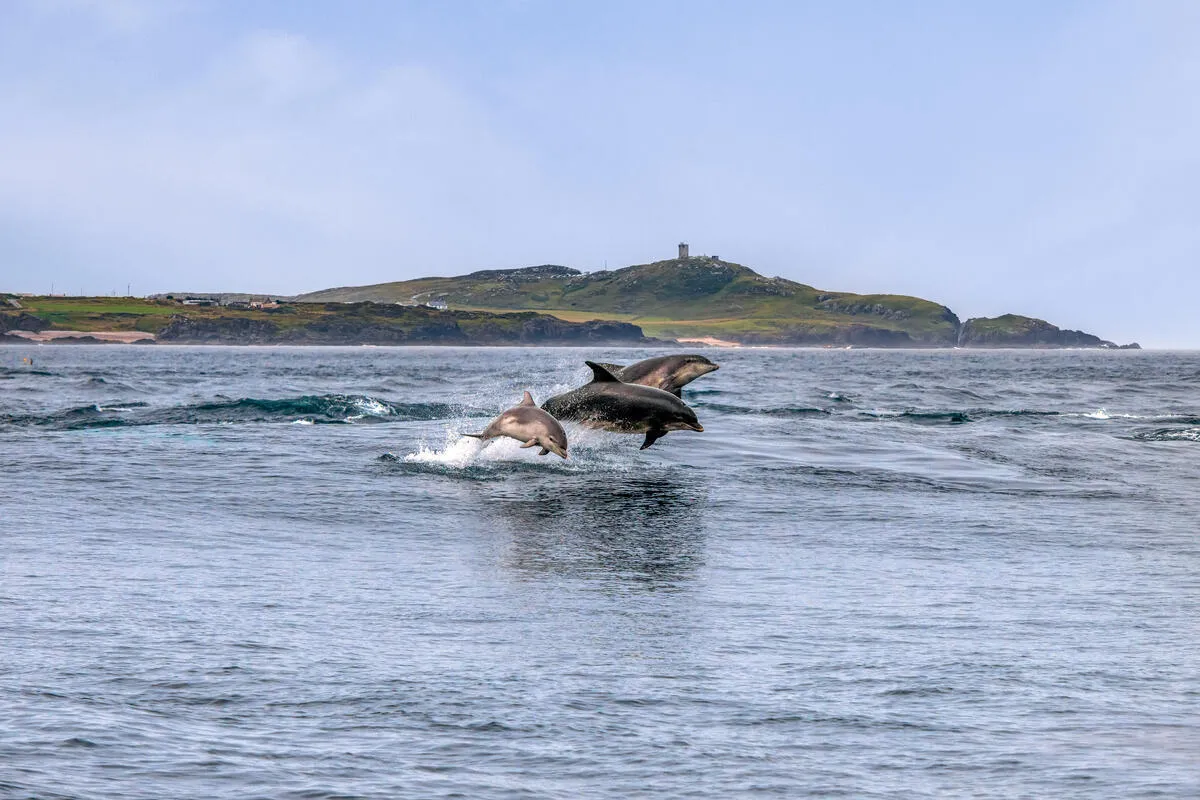
| Grey seal (Halichoerus grypus) & Harbour porpoise (Phocoena phocoena) | Coastal waters | Causeway Coast and Donegal Bay, seal colonies on rocky outcrops; porpoise sightings from a boat or kayak. |
Conservation note: The Irish otter is listed as Near Threatened (IUCN). Keep a respectful distance (≥30 m) and never attempt to feed or approach.
3. Timing Your Ride: Seasonal Wildlife Calendars
| Month | Highlights |
|---|---|
| January–February | Wintering geese on Lough Derg, greylag goose flocks; seal haul-outs on the Causeway Coast. |
| March–May | Early spring migrations, waders on the east coast, puffins returning to colonies; red-billed choughs breeding in Killarney. |
| June–July | Peak seabird nesting (puffins, razorbills), golden eagles in Glenveagh; otters active in river runs. |
| August–October | Autumn waterfowl migration (mallards, teal), red deer rut (Killarney, Wicklow), corn crake choruses in Connemara. |
| November–December | Large flocks of barnacle geese, wintering swans, occasional vagrant rarities (e.g., snow bunting) on coastal dunes. |
Best practice: Plan rides early in the day (sunrise–mid-morning) for optimal wildlife activity and cooler temperatures. Late afternoon rides are also rewarding for mammals that become crepuscular.
4. Gear & Essentials for a Wildlife-Friendly Cycle
| Item | Why It Matters |
|---|---|
| Bike | A sturdy hybrid or gravel bike with wide tyres handles mixed surfaces (gravel, tarmac, forest tracks). |
| Helmet & Lights | Safety first, bright front light for low-light dawn rides; rear light to alert wildlife of your presence. |
| Binoculars | 8×42 or 10×42, compact, waterproof models (e.g., Nikon Monarch). |
| Field Guide | Collins Complete Guide to Irish Wildlife (2024 edition) or a smartphone app (BirdWatch Ireland) for quick ID. |
| Waterproof Jacket | Irish weather is changeable; breathable rain shell keeps you dry without overheating. |
| Camera | Mirrorless with a 70-300 mm zoom for distant birds; keep flash off to avoid startling animals. |
| Pack | Small pannier or frame bag (≤5 kg) for snacks, water, map, and a lightweight first-aid kit. |
| Eco-Friendly Snacks | Re-usable containers, locally sourced fruit, nuts, avoid plastic waste that can harm wildlife. |
Ethical Riding Checklist
- Ride quietly: Keep cadence steady; avoid sudden brakes that create noise.
- Stay on designated paths: Protect fragile habitats (e.g., heather moorland, dune systems).
- Keep distance: Use binoculars for close-up observation; never approach within 30 m of breeding birds or mammals.
- Leave no trace: Pack out all litter, avoid feeding wildlife, and respect signage (e.g., “No dogs allowed” during nesting season).
- Report sightings: Contribute to citizen-science platforms like eBird Ireland or the Irish Rare Birds Committee, valuable for conservation monitoring.
5. Sample Itinerary: 5-Day “Feathers & Fur” Loop
Day 1, Lough Derg Greenway (130 km)
Morning: Depart Banagher, ride north along the lake’s western shore. Spot mute swans, kingfishers, and red squirrels.
Afternoon: Picnic at Dromineer; keep an eye out for pine martens crossing the trail.
Evening: Sunset over the lake, perfect for photographing waterfowl silhouettes.
Day 2, Wicklow Mountains (90 km)
Early start to catch buzzard thermals. Hike a short detour to the Glenmacnass Waterfall, a favourite otter spotting spot.
Mid-day: Rest at Glendalough, watch the resident kingfisher fleet over the upper lake.
Late afternoon: Ascend to the Sugar Loaf for panoramic views of red deer grazing.
Day 3, Killarney & Gap of Dunloe (120 km)
Ride the Ring of Kerry circuit, entering Killarney National Park via Muckross.
Morning: Listen for the chough’s metallic call from the cliffs.
Afternoon: Cycle the Gap of Dunloe; golden eagles may be seen soaring above the “Ladies View”.
Evening: Night walk (guided) to hear the low hoot of the barn owl.
Day 4, Causeway Coast (75 km)
Cross the Giant’s Causeway early to avoid crowds; watch puffins on the cliffs.
Mid-day: Ferry to Rathlin Island, a hotspot for guillemots and razorbills.
Late afternoon: Spot seals basking on the rock platforms; if lucky, a dolphin pod may flash nearby.
Day 5, Glenveagh & Donegal (80 km)
Ride through the remote Donegal landscape, entering Glenveagh National Park.
Morning: Golden eagles often patrol the high peaks; binoculars essential.
Afternoon: Hike a short trail to the lake for otter sightings.
Evening: Return via the coastal road, stopping at a traditional “café” for local seafood and a well-earned rest.
Total distance: ~495 km, comfortably achievable over a long weekend with moderate daily mileage (≈100 km). Adjust as needed for fitness level.
6. Guided Options & Local Resources
- Wilderness Ireland Bike Tours: Offers wildlife-focused tours in Killarney and Donegal, led by naturalists with binoculars and spotting scopes.
- BirdWatch Ireland: Provides free “Birdwatching Hotspots” maps (PDF) for each county, highlighting optimal viewing points along cycle routes.
- Irish Wildlife Trust (IWT): Publishes seasonal species checklists and runs volunteer “Citizen Survey” days where cyclists can help record sightings.
- Local Bike Hire: Many towns (e.g., Westport, Killarney) have e-bike hire schemes, allowing you to cover longer distances with less effort, great for early-morning wildlife drives.
7. Safety and Health Considerations
| Hazard | Mitigation |
|---|---|
| Changing weather | Carry a waterproof, breathable jacket; check Met Éireann forecasts before setting out. |
| Road traffic | Stick to low-traffic greenways; use reflective clothing and lights, especially in dusk hours. |
| Wildlife encounters | Never attempt to feed or handle animals; keep a safe distance to avoid stress or aggression (e.g., badgers can be defensive). |
| Hydration & nutrition | Carry at least 1 L of water per rider per day; supplement with electrolyte tablets on hot days. |
| First aid | Pack a compact kit with antiseptic wipes, bandages, and a whistle, useful for alerting others if you have a wildlife-related injury (e.g., a stray branch). |
8. Conservation Impact: How Your Ride Can Help
Cycling is a low-impact way to explore natural areas compared with motorised tourism. By following the Leave No Trace principles and supporting local conservation groups (donations, volunteer surveys), you contribute directly to protecting the habitats that host Ireland’s feathers and fur.
- Participate in “BioBlitz” events: Many parks host weekend surveys where cyclists record species; data feeds into the National Biodiversity Database.
- Choose eco-friendly accommodations: B&Bs with solar heating or certified “Green Tourism” status reduce your carbon footprint.
- Support responsible wildlife tourism: Book guided tours that adhere to the Irish Wildlife Act (2000) and avoid operators that use bait or disturb nesting sites.
Conclusion
Most days you will see the common things: a buzzard riding a thermal, a fox crossing at dusk, swans on the water. Golden eagles and otters are the exception, and you will miss them far more often than you find them. That is the arrangement, and it is why the early starts matter.
Keep your distance, stay on the paths, and write down what you see. The species lists that make a guide like this possible are built out of ordinary riders recording ordinary sightings.